Maldives Diving in November: Fuvahmulah's Head Start
November is the turn of the season in the Maldives — and in Fuvahmulah it means hammerhead season at dawn, threshers building toward their peak, and tiger sharks every day, as always. High-season diving before the high-season wave.
Maldives Diving in November: Fuvahmulah's Head Start
Maldives diving in November sits right on the turn of the seasons: the southwest monsoon fades, the seas settle, and the calm months are just beginning. In Fuvahmulah, the Maldives' deep south, that means hammerhead season is already running at dawn, thresher encounters are building toward their December–April peak — and the tiger sharks, as always, haven't gone anywhere. If you want high-season diving before the high-season wave arrives, November is your month.
Here's the honest picture, from the team that's in this water every day.
What is diving in the Maldives like in November?
Across the Maldives, November is the handover month. The southwest monsoon — the wetter half of the year — is winding down, and the northeast season that brings the classic calm, clear months is moving in. Early November can still throw a passing shower or a bumpy afternoon; by the back half of the month, conditions are generally settling into the steadiness divers picture when they think of the Maldives.
In Fuvahmulah the water itself barely changes: 27–29 °C year-round, which is exactly why a 3 mm suit is all you'll ever need here. What changes in November is the rhythm — dawn dives get more rewarding by the week, and the island starts leaning into its strongest months.
One thing we want to say plainly: the ocean doesn't read calendars. We plan every day around what the water is actually doing — sites, timing, entries. That's true in November and it's true in February.
What can you see in Fuvahmulah in November?
This is where the deep south separates itself from the rest of the country.
- Tiger sharks — daily, as always. There is no tiger season in Fuvahmulah. We dive with them year-round, typically 4–10 on a single dive. November is not an exception; nothing is.
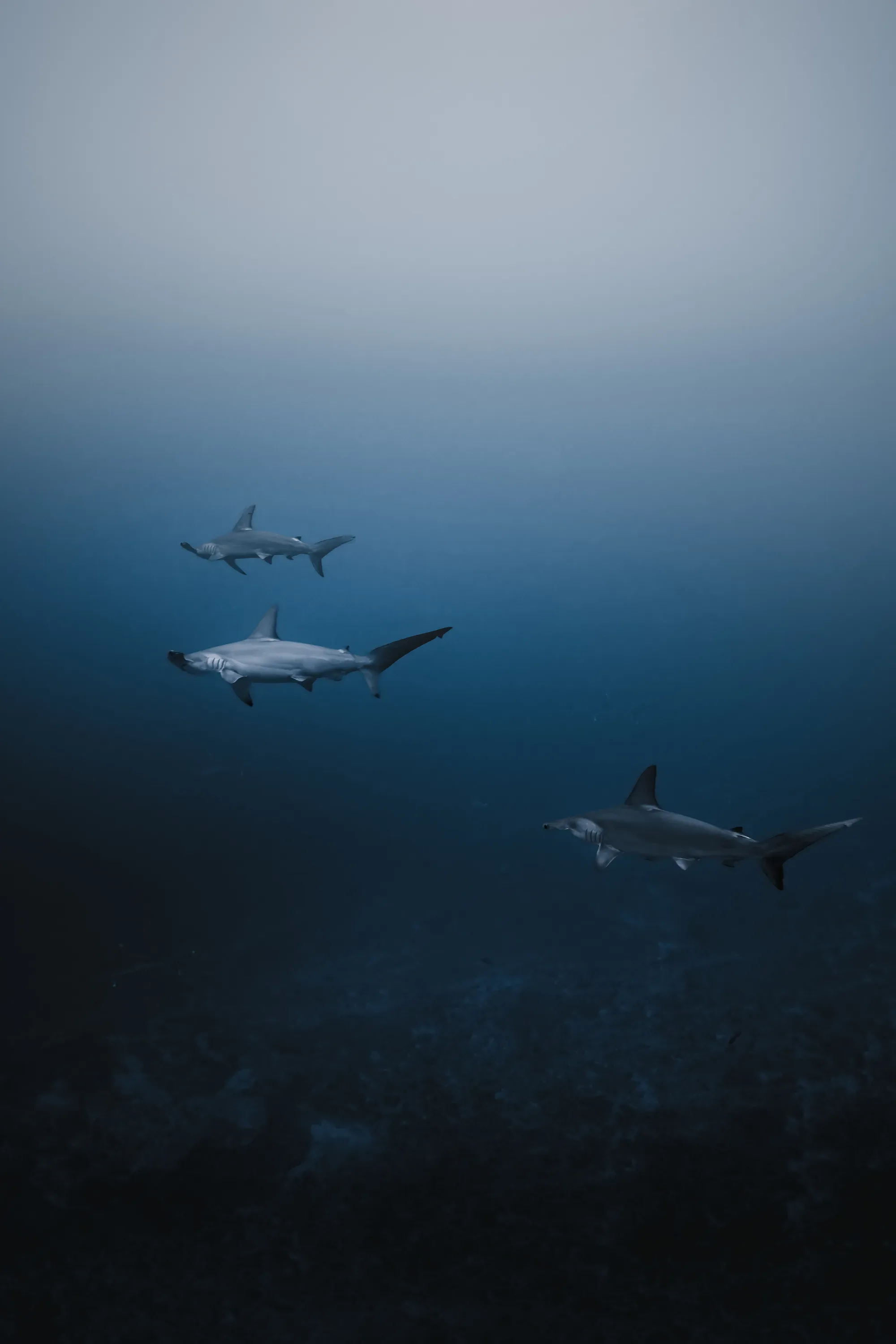
- Hammerheads — season open. From October through April, scalloped hammerheads run at dawn, usually at 20–30 metres. By November the season is properly underway, and the early alarm clock starts paying for itself.
- Threshers — building toward peak. Threshers are regular dawn visitors here year-round, with the strongest months running December to April. November sits right on the ramp.
- Silvertips and reef sharks — regular sightings. The supporting cast rarely takes a month off either.
And the honest part: if oceanic mantas or whale sharks are the one thing your trip must deliver, November isn't their window — mantas peak March–May and whale sharks are at their best February–April. In that case we'll point you at spring — and mean it. Our month-by-month guide lays the whole year out.
Is November high season or low season in the Maldives?
Neither — it's the doorway between the two, and that's precisely its value.
The classic Maldives high season runs December to April: the calmest seas, the biggest demand, and the window that fills first. November delivers the front edge of those conditions before the wave of travelers lands. The island is quieter, the dawn dives are already delivering, and you're diving the same plateau the January crowd is currently daydreaming about.
If you're reading this in August or September, the timing works in your favor: most divers book their trips two to four months out, which puts a November week exactly inside your planning window.
Why the deep south plays by its own rules
Most Maldives diving is built around channels and seasonal aggregations — the right atoll, the right tide, the right months. Fuvahmulah works differently. It's one small island far south, near the equator, with deep ocean on its doorstep, and much of the marine life is resident rather than passing through.
The signature tiger dive happens on a sandy plateau at 6–8 metres, minutes from the harbour — briefed, structured and unhurried, with dedicated safety divers on every single tiger dive and a maximum of three guests per professional in the water. Groups stay small, usually 3–8 divers, and every guide on our team is a certified instructor. The rest of the island's dive sites ring the same shoreline: walls, dawn ridges, blue water.
That's why the November question is easier here than anywhere else in the country. You're not gambling on whether the action has arrived yet. It lives here.
Who should pick November — and who should wait
November is your month if you want tigers plus hammerheads plus early threshers in the same week, you'd like the run-up calm before the December–April rush, or your dates are flexible and you'd rather not compete for high-season space.
Wait for spring if oceanic mantas (March–May) or whale sharks (February–April) top your list — we'd rather tell you that now than have you discover it on the boat.
And in fairness: early November can still carry a leftover of the wet season. If your one non-negotiable is mirror-flat seas every single day, deep high season is the safer bet. We'd rather you choose with open eyes — that's the only way a trip exceeds expectations.
Planning a November trip to Fuvahmulah
The practical side is simpler than most people expect.
- Getting here and staying here: our dive-and-stay packages include Malé–Fuvahmulah flights, hotel with breakfast, transfers, and three dives a day — one tiger dive plus two other sites — with fins, mask and wetsuit covered. The packages run from the 5-night Liquid Five ($1,250–1,835 pp depending on hotel) to the 10-night Liquid Ten ($2,470–3,635 pp).
- Certification: Open Water with basic control is technically enough for the tiger site itself; we recommend Advanced for all other sites. The hammerhead dawn dives sit at 20–30 metres, so comfort at depth matters — and if you're not there yet, we'll tell you honestly and build you up on-island.
- Water and kit: 27–29 °C, 3 mm suit, done.
Nervous divers are welcome, by the way. Thorough briefings are the backbone of everything we do — most fear doesn't survive its first proper briefing.
FAQ: Maldives diving in November
Is November a good month to dive the Maldives?
Yes — with honest nuance. It's the transition into the calm season: conditions improve through the month, and in Fuvahmulah the headline animals (tigers, hammerheads, threshers) are all active. Early November can still see a passing shower.
Can you see tiger sharks in Fuvahmulah in November?
Yes — the same way you can in any month. Tiger sharks are here daily, year-round, typically 4–10 on a dive. November changes nothing about that.
Is November still rainy season in the Maldives?
It's the tail end of it. The southwest monsoon fades as the northeast season moves in; seas generally settle as the month goes on.
How warm is the water in Fuvahmulah in November?
27–29 °C, like the rest of the year. A 3 mm suit is plenty.
What certification do I need for Fuvahmulah?
Open Water with solid basic control is technically enough for the tiger dive; Advanced is recommended for all other sites, especially the dawn dives at 20–30 metres.
November is the month the ocean here quietly turns the lights on — before anyone's watching. If that sounds like your kind of timing, check your dates or talk to us first and we'll tell you exactly what your week would look like.
Liquid Shark Divers is Fuvahmulah's premium shark diving center and creative dive hub — small groups, uncompromising safety standards, and encounters that change how people see sharks. Meet the team →