Tiger Harbour — A Harbour-Mouth Miracle
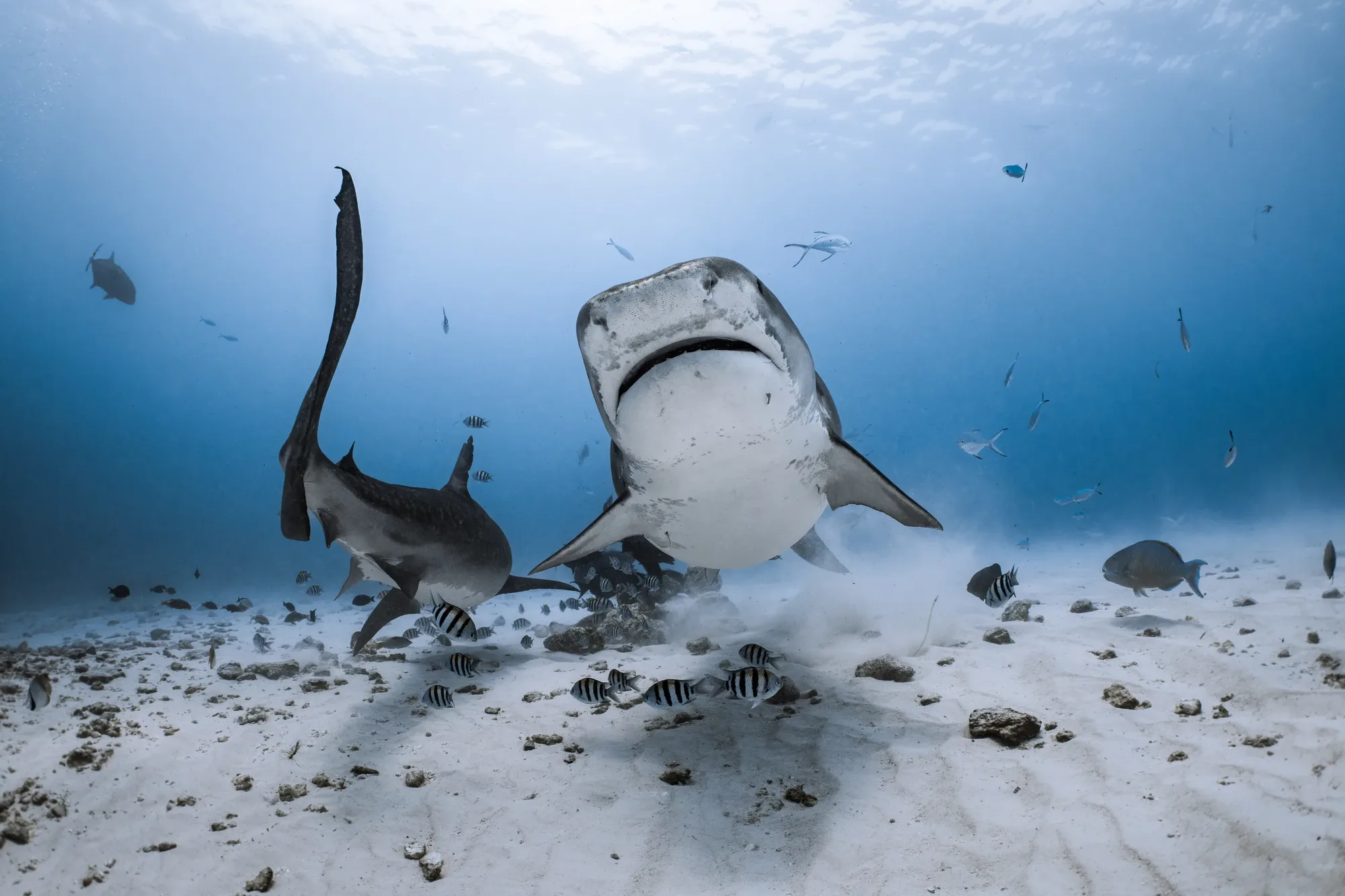
The Fuvahmulah tiger shark dive happens at Merika Falhagando, locally known as Tiger Harbour — a sandy plateau just outside the harbour entrance on Fuvahmulah's south-east coast. At 6–8 metres of clear, warm water, it is one of the most accessible tiger shark dives on Earth, and almost certainly the most consistent.
The site exists because of a centuries-old pattern. Fuvahmulah's fishermen have been cleaning their catch at the harbour entrance for as long as anyone can remember, throwing offcuts into the water at the same spot every day. Over generations, tiger sharks learned the schedule. A resident population established itself — not because of tourism, but because of the fishermen. Today, we dive alongside a feeding tradition that predates dive tourism by decades.
This is what makes Fuvahmulah fundamentally different from every other tiger shark destination in the world. The sharks aren't baited into appearing. They're already there. We dive *with* a natural pattern, not against one.
Location
Merika Falhagando, harbour-mouth plateau, south-east coast of Fuvahmulah. Coordinates: -0.30658, 73.4414. Under 5 minutes by dhoni from the LSD dive centre.
Topography
Shallow sandy plateau (5–10m) at the edge of Fuvahmulah's harbour wall. Drops into deep water almost immediately. Sheltered from the main current.
Conditions
Excellent visibility year-round (30m+). Mild current. Water temp 28–30°C in every month. 3mm wetsuit is plenty for most divers.
Success Rate
Tiger shark encounters on every dive. This is not marketing language — it is the operational reality of a resident population that has been present for decades.
See Tiger Harbour alongside the other 20 Fuvahmulah dive sites — the island's other signature sites include Farikede, Bilhi Feyshi, and Kudhu Falhagando, all reachable from the same dive centre.
Meet Galeocerdo cuvier
The Fourth Largest Shark
After whale, basking, and great white
Species Data
- Scientific name
- Galeocerdo cuvier
- Family
- Carcharhinidae (requiem sharks)
- Adult length
- 3.0–4.5m (max recorded ~5.5m)
- Adult weight
- 385–635 kg average
- Lifespan
- 30–50 years
- Diet
- Opportunistic — fish, cephalopods, turtles, carrion
- IUCN status
- Near Threatened (global population declining)
- Distinguishing marks
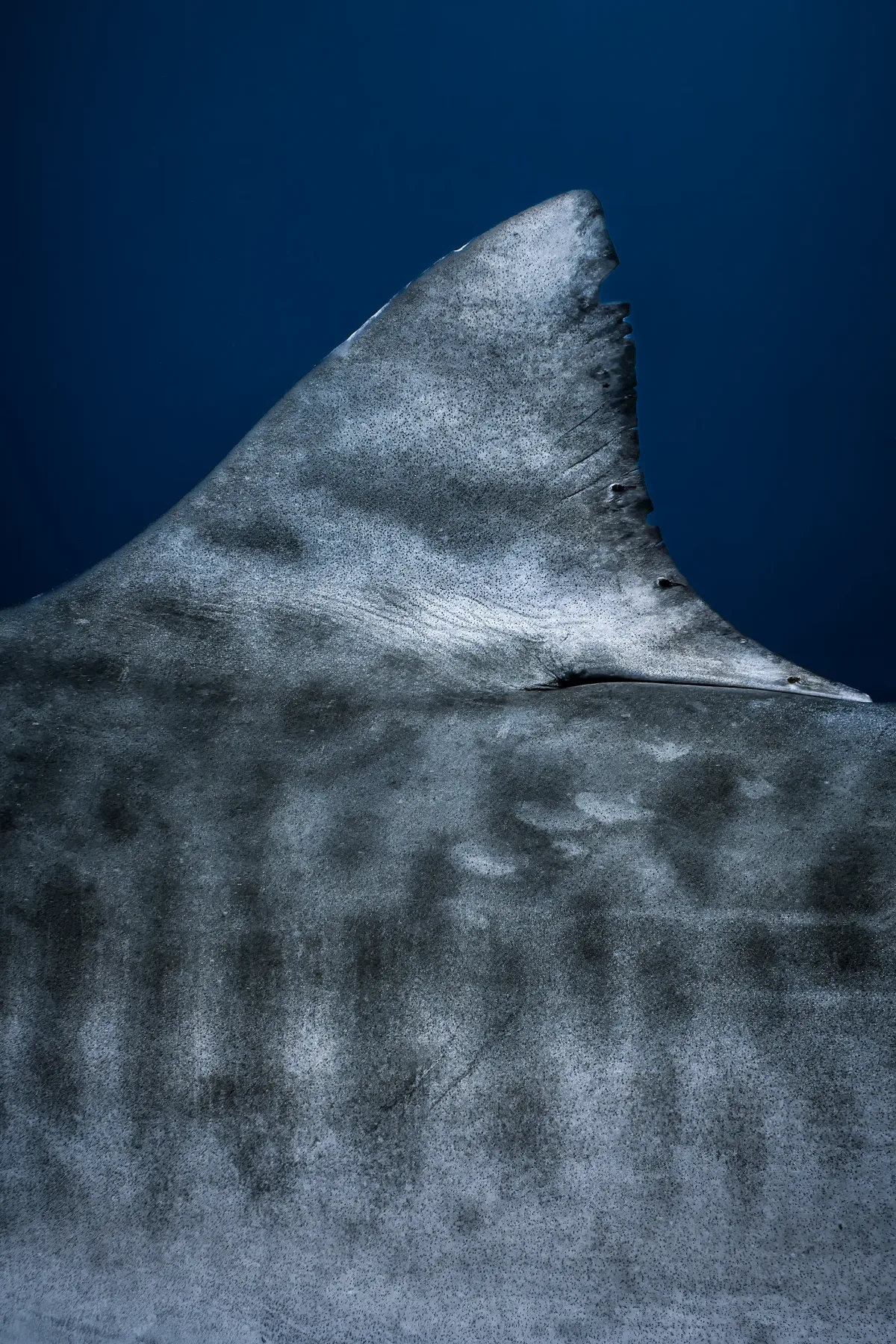
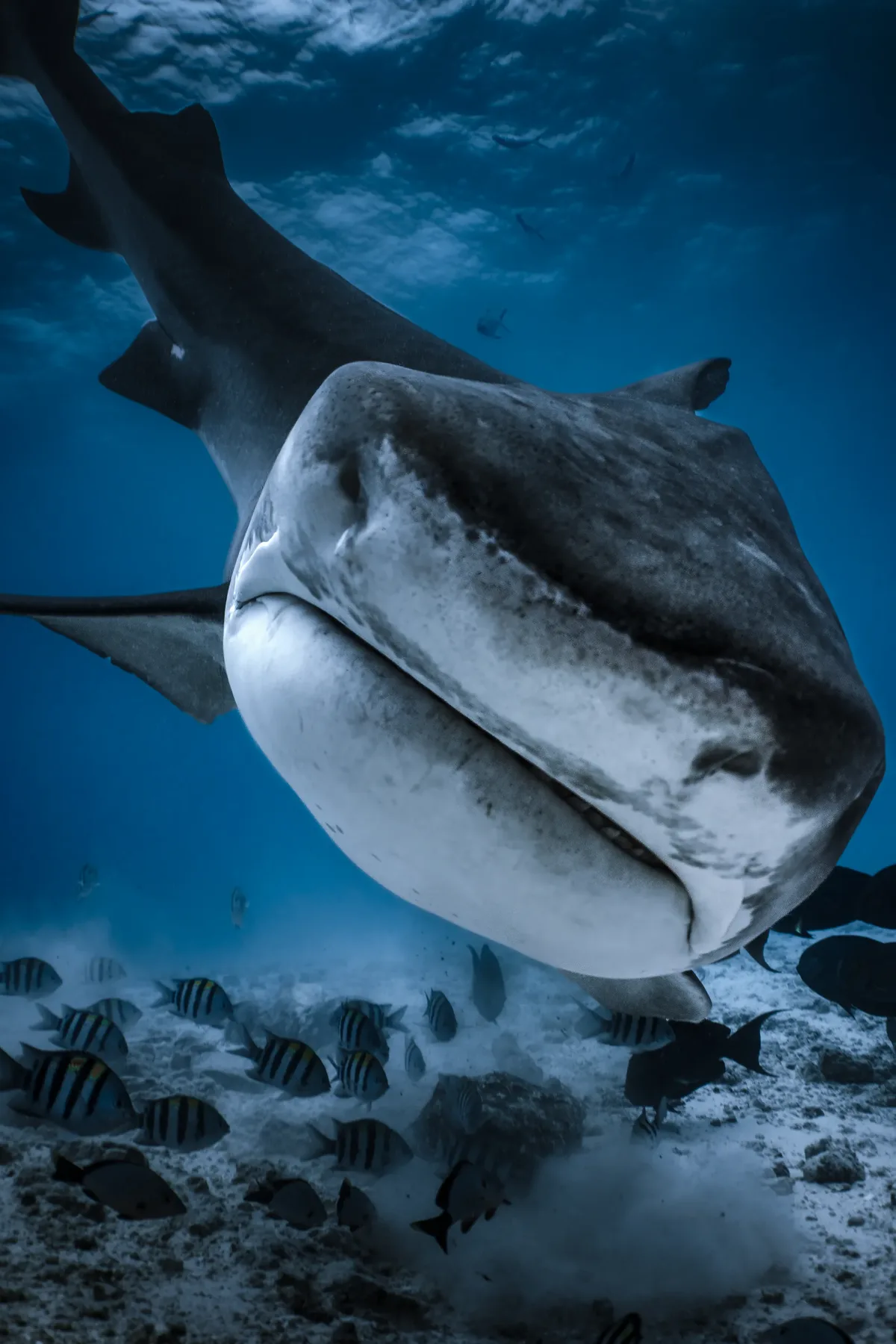
- Vertical dark stripes on juveniles (fade with age); broad blunt snout
Behaviour profile — from daily observation
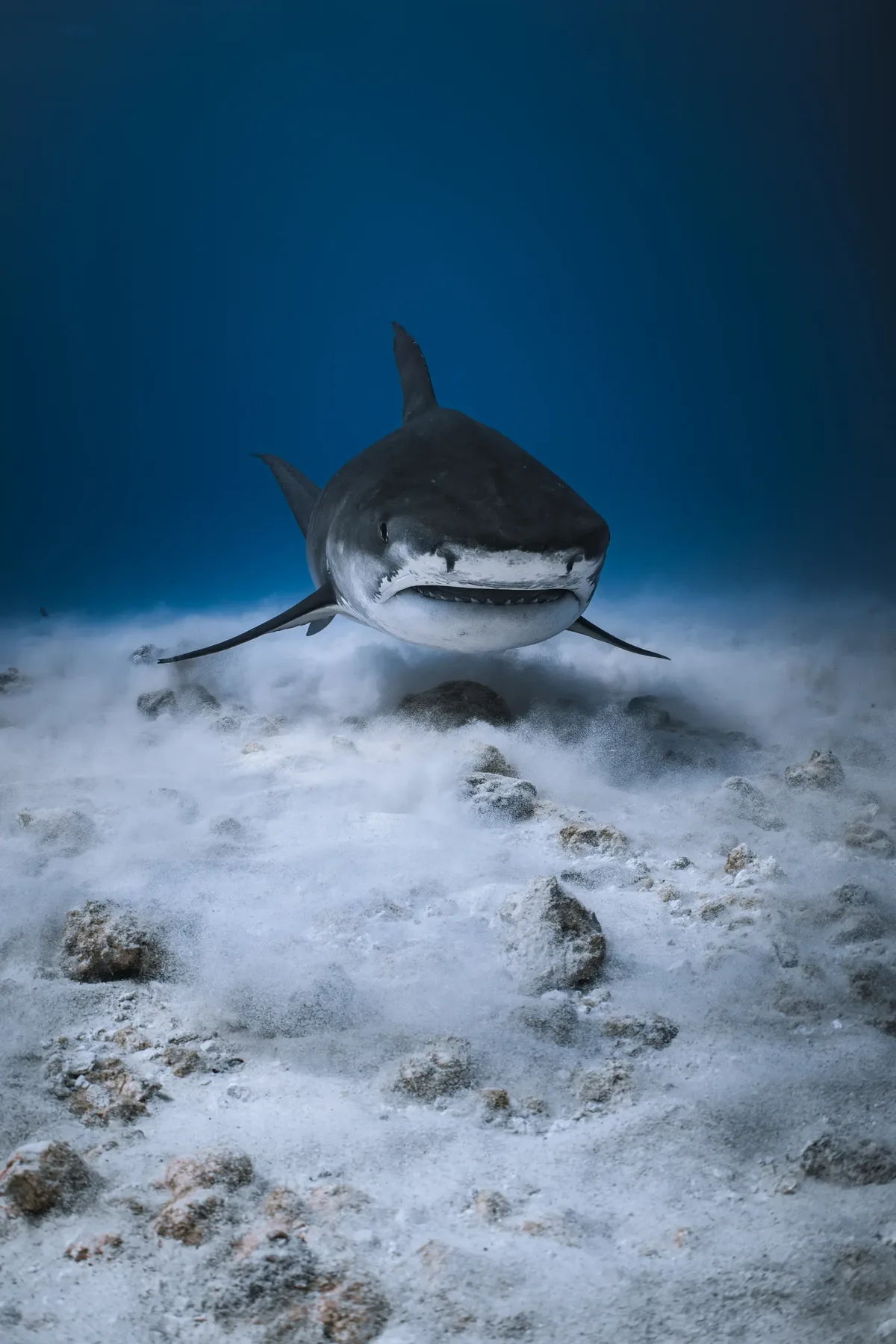
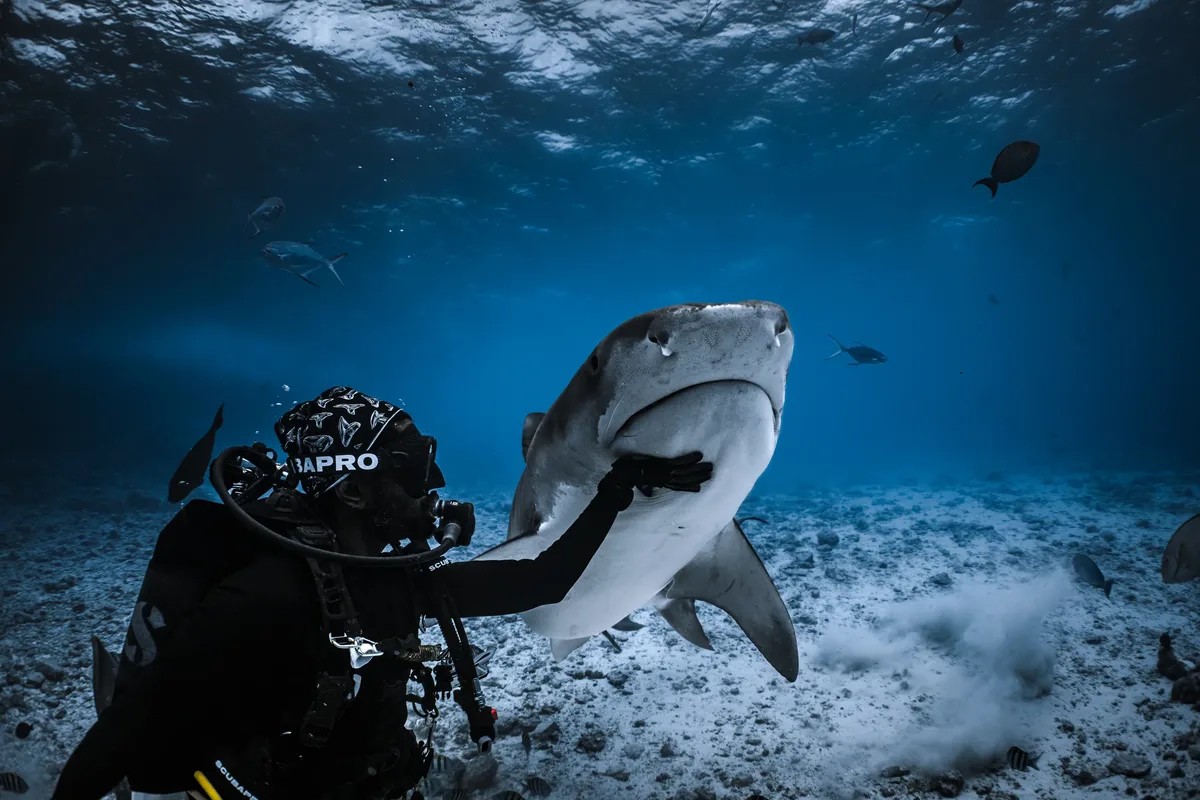
Slow, deliberate, cautious. Tiger sharks are investigators — they use their senses to assess before committing. At Tiger Harbour, we see distinct personalities: bold individuals who approach within a metre, and shy animals who stay distant. Large females clearly dominate the best positions on the plateau.
How the Tiger Shark Dive Works
The flow of a dive day — from the slot allocation in the morning to the debrief after.
There is no fixed dive time
Tiger Harbour is a shared site. Dive slots are distributed daily among Fuvahmulah's dive centres to keep the site calm and avoid overcrowding. Our team receives the day's slot in the morning and the schedule is built around it. This is a conservation decision at the island level — not ours alone — and it is part of why the dive remains so consistent.
The Daily Slot System
The tiger shark dive at Tiger Harbour is a shared resource. Dive slots at the site are distributed daily among Fuvahmulah's dive centres — there is no fixed time. Our team receives our slot the morning of the dive, and your schedule for the day builds around it.
Morning Briefing
Once we know the day's slot, we brief the group in detail on land. We walk you through the procedure, safety protocol, what the sharks will do, and exactly what you should do in the water.
Boat Departure
Short dhoni ride from the harbour. Tiger Harbour sits just outside the harbour mouth — under five minutes to the site. We time the departure precisely around our slot.
Descent & Positioning
Back-roll entry, controlled descent to the sandy plateau at 6–8 metres. Settle into position well before any sharks arrive. The group stays compact and stationary.
The Encounter
Tiger sharks arrive individually or in small groups. You remain stationary on the sand. Sharks circle, approach, and pass — sometimes within a metre of you. The encounter typically lasts 30–45 minutes.
Ascent & Debrief
Slow ascent, safety stop, surface. Back on the boat and at the dive centre, our team reviews the dive, helps identify the individual sharks you saw, and checks in on how the dive felt.
A Population You Know by Name
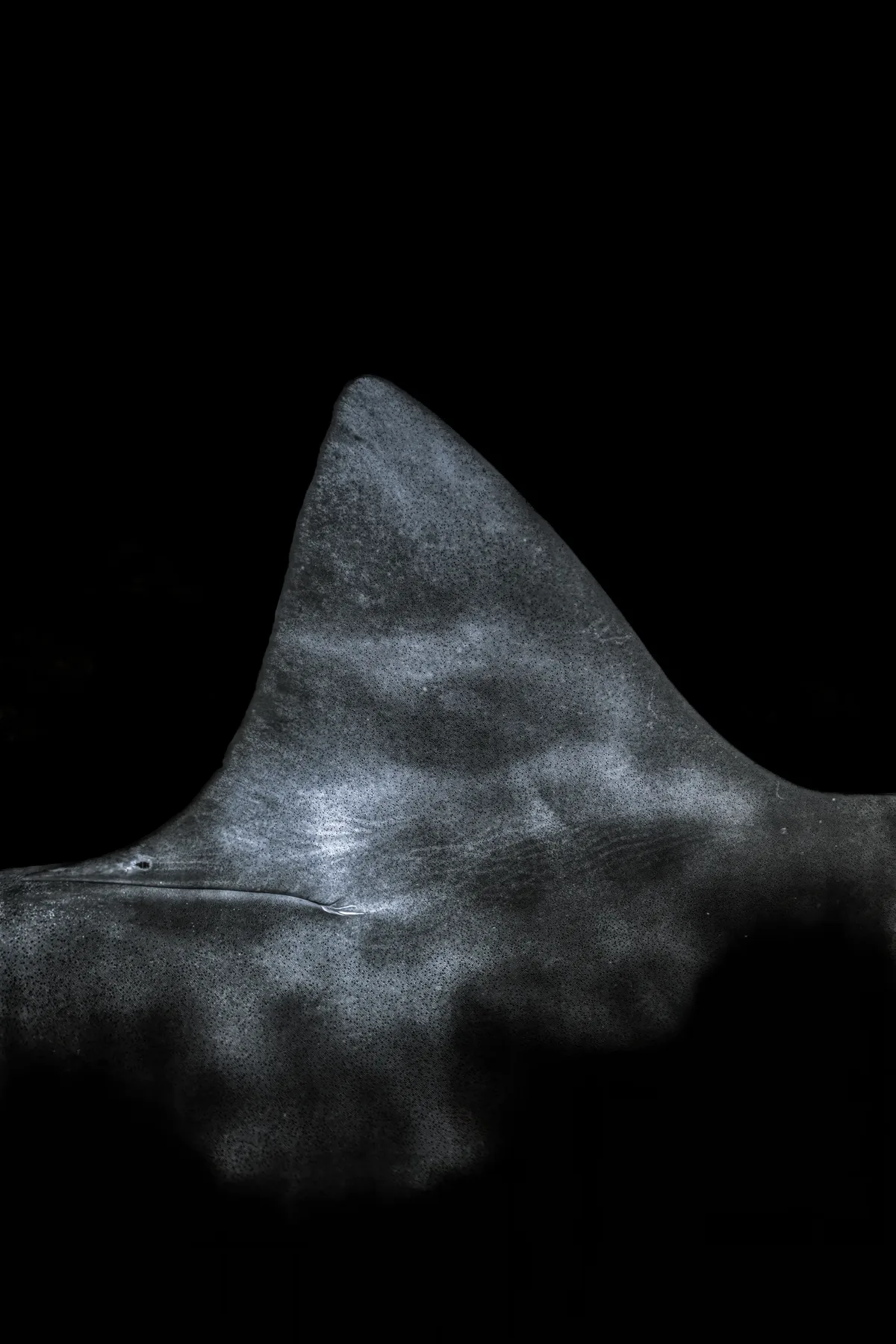
Tiger sharks are individually identifiable by natural markings — fin shape, body scarring, and unique pattern on the tail and flanks. Over years of daily diving at Tiger Harbour, our team has catalogued and named more than 300 individual animals.
We log every sighting. We track site fidelity. We notice behavioural changes. We know which sharks arrive at which time of day, which are dominant, which are shy, which have new scars. Many of our repeat guests come back and recognise the same animals they met on a previous trip.
This isn't a marketing gimmick — it's the foundation of our conservation program. Read about how the shark ID database supports long-term protection.
Safety, Ethics, and Trust
The rules that make this dive safe for you and respectful for the animals.
What We Do
- Thorough land-based briefing before every dive
- Experienced safety team in the water at all times
- 1:3 guide-to-diver ratio, strictly enforced
- Tuna heads only, placed under a pile of rocks
- Strict procedure for bait placement and diver positioning
- Eye contact and calm body language with sharks
- Daily logging of every shark encounter to our ID database
What We Never Do
- No hand-feeding, ever
- No marlin heads (too oily, over-stimulates the sharks)
- No baited cages or chum clouds
- No touching, no chasing, no flash photography
- No overcrowding — we cap groups rather than grow them
- No chasing a shark that moves away
- No compromising safety procedure for a better photo
Why This Matters
The Fuvahmulah tiger shark dive works because the sharks are habituated to divers as a calm, non-threatening presence — not as a food source. Hand-feeding sites elsewhere in the world have seen progressive behavioural changes in shark populations. Our protocol exists specifically to keep this site stable, safe, and ethical for the long term.
"Soo after 30 years of diving, I decided it was time to finally do my Divemaster course, and learn new skills or simply try to remember the old ones 😅 choosing Liquid Shark Divers in Fuvahmulah was one of the best decisions I’ve made in my diving journey. I spent a full mont…"
Certification & Requirements
Certification
Open Water minimum for Tiger Harbour itself. Advanced Open Water strongly recommended for Fuvahmulah's deeper sites.
Fitness & Experience
Comfortable in mild current. No specific dive count required, but recent currency (dives in the last 12 months) helps.
Gear
3mm wetsuit is enough year-round. Full gear rental available. Bring your own mask and dive computer if possible.
Common Questions
Is the Fuvahmulah tiger shark dive safe for recreational divers?
+
Do you hand-feed the tiger sharks?
+
How close do the tiger sharks actually get?
+
What's the best time of year to see tiger sharks at Tiger Harbour?
+
How many tiger sharks will I see on a single dive?
+
Can I bring a camera? Should I use flash?
+
How many times should I dive Tiger Harbour on a trip?
+
Fuvahmulah Dive Packages
5 to 10-night tiger shark diving packages with hotel and transfers included.
Diving Rates & Prices
Transparent pricing for shark dives, courses, equipment, and add-ons.
Tiger Sharks of Fuvahmulah
300+ named resident tiger sharks. Year-round encounters at Tiger Harbour.
Thresher Sharks of Fuvahmulah
Dawn cleaning station encounters with the elusive Pelagic Thresher.
Hammerhead Sharks of Fuvahmulah
Schooling scalloped hammerheads at Fuvahmulah's deep southern sites.
Oceanic Whitetip Sharks
Open-ocean encounters with the critically endangered oceanic whitetip.