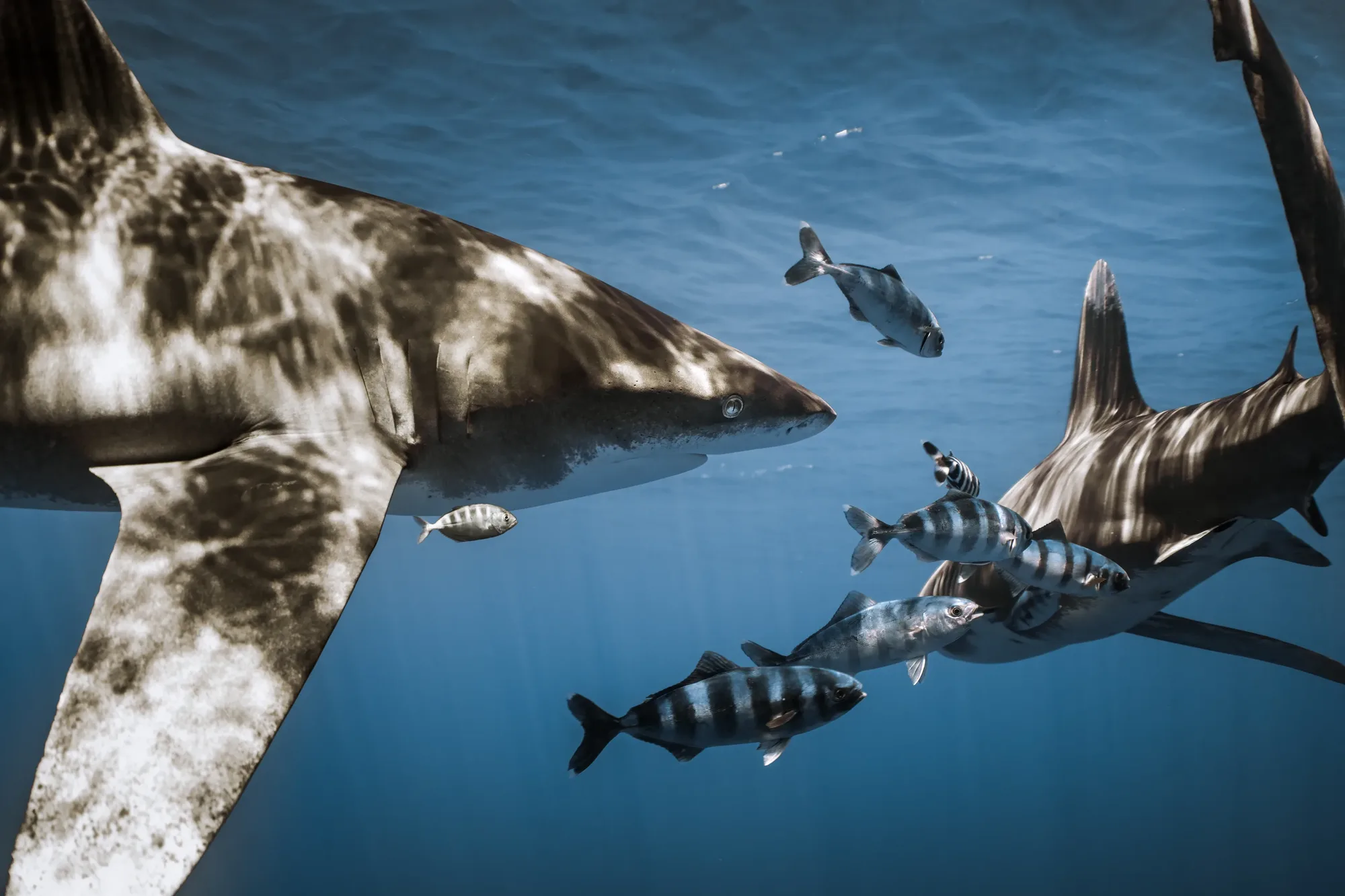
Meet Carcharhinus longimanus
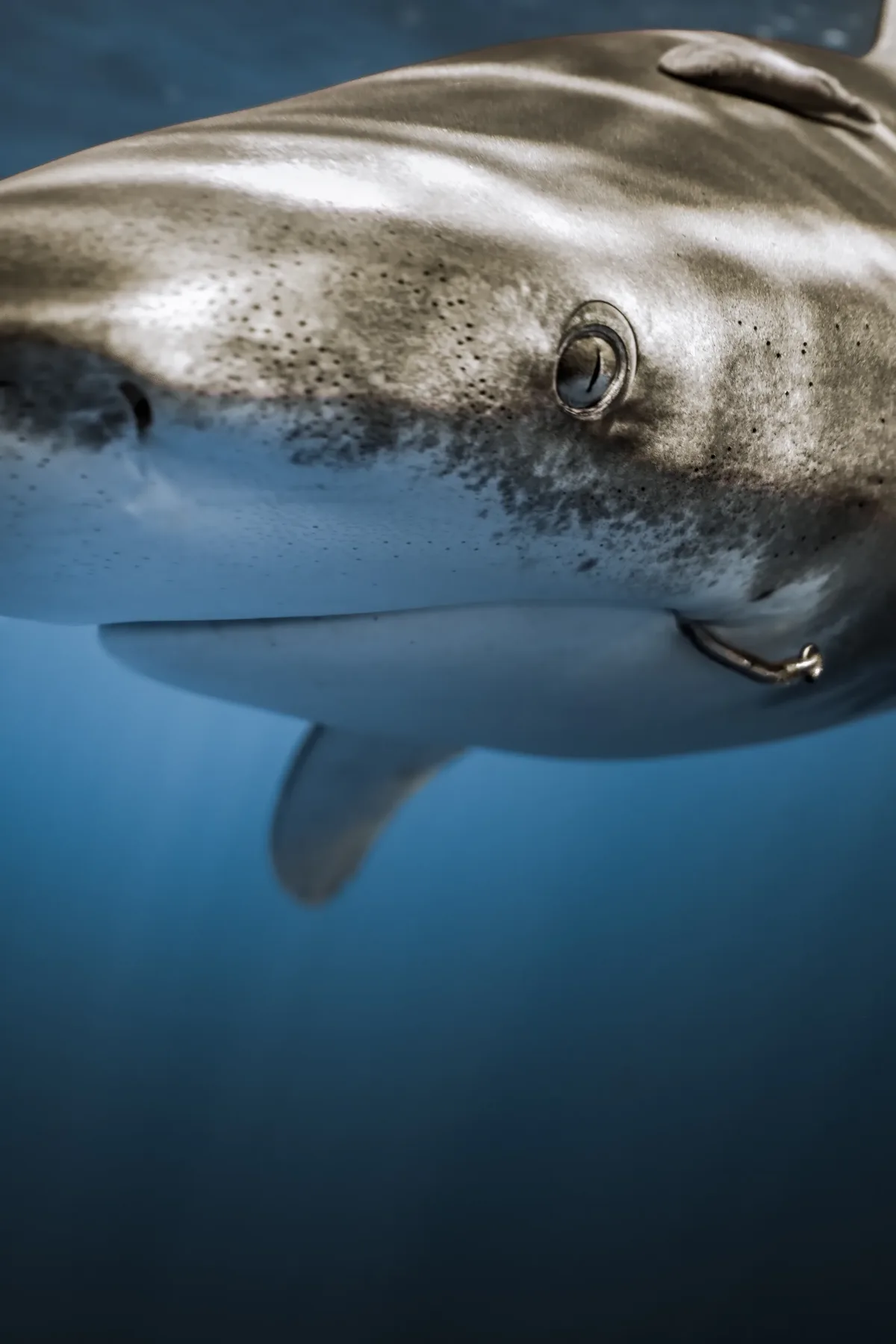
Species Data
- Scientific name
- Carcharhinus longimanus
- Family
- Carcharhinidae (requiem sharks)
- Adult length
- 2.5-3.0m (max ~3.5m)
- Adult weight
- 60-170 kg
- Lifespan
- 20-25 years
- Diet
- Bony fish, cephalopods, seabirds, marine mammals, carrion
- IUCN status
- Critically Endangered (98% population decline in some regions)
- Distinguishing marks
- Large, rounded, white-tipped first dorsal and pectoral fins; stocky build; bold, inquisitive behaviour; often accompanied by pilot fish
Open-ocean behaviour — why respect matters
Oceanic whitetips are the apex predators of the blue ocean. Slow, persistent cruisers designed for endurance — covering vast distances with minimal energy expenditure. They are notoriously bold and inquisitive, approaching slowly with distinctive rounded fin movements. Unlike reef sharks that flee from humans, longimanus will investigate you closely. This boldness demands respect and strict adherence to safety protocols. At Fuvahmulah, we conduct dedicated open-ocean snorkelling trips to the fishing buoys where these sharks congregate, with shark safety divers accompanying every guest.
Why Every Encounter Matters
Jacques Cousteau once called the oceanic whitetip 'the most dangerous of all sharks.' He was wrong about the danger, but right about their significance. They were once the most abundant large predator on Earth - estimated in the hundreds of millions across the world's tropical oceans.
Industrial longlining devastated their numbers. The oceanic whitetip's habit of investigating anything at the surface made them catastrophically vulnerable to baited hooks. Population declines of 80-98% have been recorded across their range. They are now Critically Endangered - the same category as the mountain gorilla.
Every encounter at Fuvahmulah is a reminder that these animals are still here. The Maldives' shark fishing ban provides crucial protection for the remnant population in the Indian Ocean.
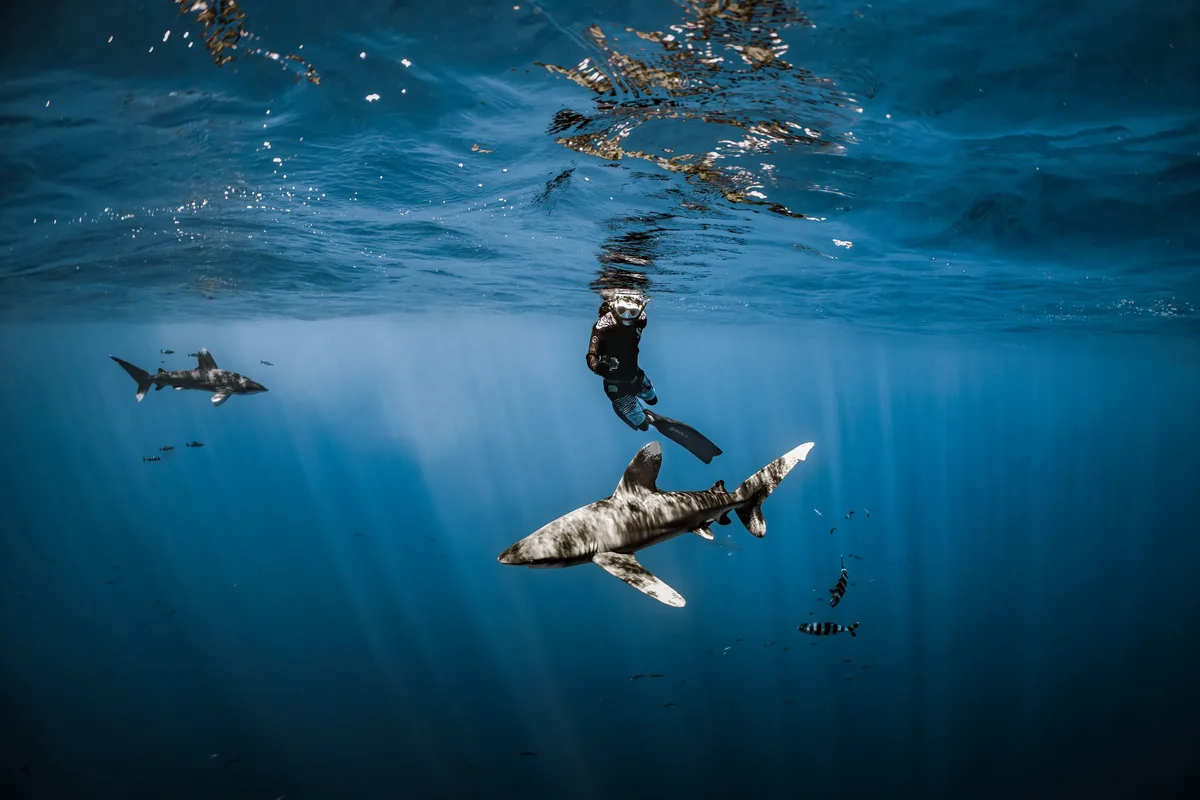
How the Oceanic Whitetip Trip Works
We run dedicated oceanic whitetip trips on a weekly or biweekly basis, depending on ocean conditions and guest availability. On the day of the trip, we depart from the harbour early morning — around 7am — by speedboat, heading to the Huvadhoo Atoll fishing buoy or the fishing buoy near Fuvahmulah, depending on conditions.
The boat ride takes approximately 45 minutes to 1 hour in good conditions, or up to 1 hour and 30 minutes if the sea is rougher. Once we reach the fishing buoy, we conduct a thorough briefing on board. Shark safety divers enter the water first to assess shark behaviour and count the animals present before any guests get in.
Guests enter the water one by one, each accompanied by a dedicated shark safety diver. Once everyone is in, shark safety divers maintain a 360-degree watch around the group — including monitoring from below. This is open-ocean snorkelling, not diving. On most trips you can expect 6 or more longimanus around you, and on good days the count climbs past 30 — surrounding you in every direction. Unlike anywhere else in the world where oceanic whitetip encounters are fleeting and solitary, at Fuvahmulah you are immersed among them.
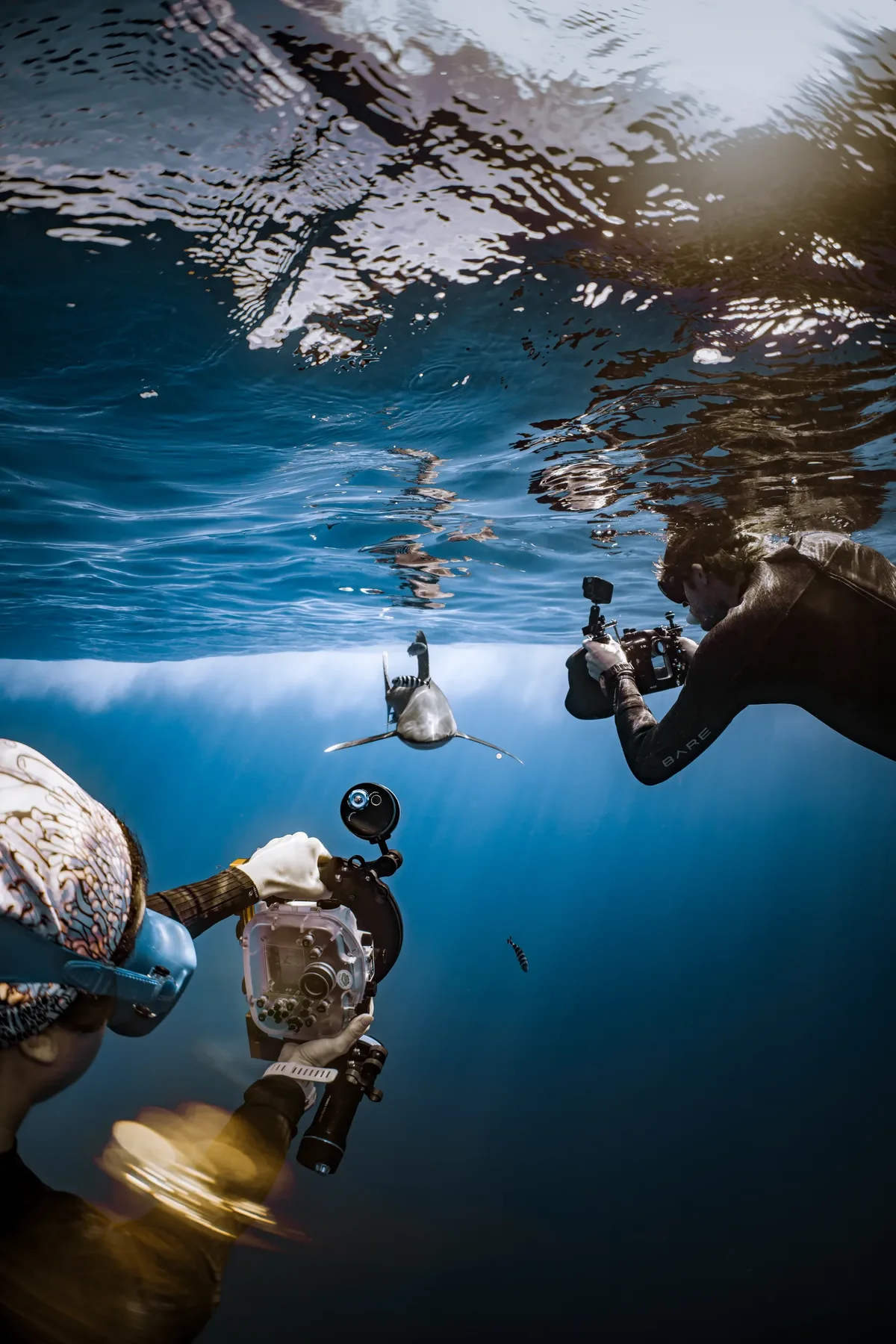
Encounter Protocol and Safety Rules
Oceanic whitetips are apex predators of the open ocean and every encounter must be conducted with respect and strict safety awareness. No freediving or head-first diving is allowed — you may sink vertically in the water column but no freediving. No splashing. No sudden movements. Maintain 360-degree awareness at all times.
Do not touch the sharks. Do not back away from sharks — hold your position and let them pass. Establish a barrier between you and any approaching shark using a short camera stick or similar object. Do not use long poles like the Insta360 X5 selfie stick — a short, compact stick is appropriate.
These encounters are about respect. Longimanus are bold and inquisitive — they will approach closely. Your job is to remain calm, maintain awareness, and follow your shark safety diver's lead at all times. The encounters are extraordinary precisely because of this mutual respect between human and apex predator.
From Abundant to Critically Endangered
The oceanic whitetip's decline is one of the most dramatic population collapses in marine history. Their large, oil-rich fins are among the most valuable in the shark fin trade. Combined with industrial bycatch mortality, the species has lost the vast majority of its global population within a single human generation.
The Maldives banned shark fishing in 2010 - one of the first nations to do so. This blanket protection covers all shark species including the oceanic whitetip. Fuvahmulah's dive tourism provides direct economic justification for maintaining this ban.
When you swim with sharks at Fuvahmulah, you're part of the conservation argument. Living sharks generate tourism revenue. Dead sharks generate a one-time fin price. The economics are overwhelmingly in favour of protection.
Reproduction & Lifecycle
Viviparous with yolk-sac placenta. Litters of 1-15 pups (usually 6-9) after 10-12 months gestation. Pups are 60-75cm at birth. Sexual maturity at 6-9 years. The relatively fast reproduction rate should have made this species resilient — but industrial fishing pressure overwhelmed their ability to recover. Current reproduction cannot keep pace with bycatch mortality in most regions.
Feeding Ecology
Oceanic whitetips are apex scavengers and opportunistic predators of the open ocean. They cruise vast distances at slow speed with minimal energy expenditure, investigating anything they encounter. Their diet includes bony fish, squid, seabirds, marine mammals, and carrion. They are often first on the scene at whale carcasses or fishing boat discards. The pilot fish that accompany them may serve as scouts, leading the shark to food sources. At Fuvahmulah, encounters happen because the island acts as an oceanic waypoint — whitetips passing through deep water detour to investigate the reef edge.
Oceanic Whitetip Shark Diving Worldwide
Red Sea (Egypt, particularly Elphinstone Reef and the Brothers) is currently the most famous destination for oceanic whitetip encounters — but sightings typically involve 1-3 individuals at offshore reefs. Cat Island (Bahamas) offers seasonal encounters with similarly small numbers. Fuvahmulah is in a different league entirely: dedicated open-ocean snorkelling trips where you can find yourself surrounded by 6 to 30+ longimanus on a single trip. Nowhere else on Earth offers encounters at this scale with this species. Combined with daily tiger shark dives and 7+ other shark species, Fuvahmulah is the most complete shark destination on the planet.
Photography Tips
Common Mistakes
Practical Information
Dive Sites
- Huvadhoo Atoll Fishing Buoy
- Fuvahmulah Fishing Buoy
- Open ocean around Fuvahmulah
Best Time
Year-round (weekly or biweekly trips, conditions permitting)
Depth
Surface snorkelling (no freediving allowed)
Certification
Swimming ability required; no dive certification needed (snorkelling trip)
Common Questions
How does the oceanic whitetip trip work?
+
How often do you run the oceanic whitetip trips?
+
How many oceanic whitetips will I see?
+
Are oceanic whitetip sharks dangerous?
+
Do I need a diving certification for this trip?
+
Why are oceanic whitetips so rare now?
+
What safety equipment is provided?
+
What other pelagic sharks can I see at Fuvahmulah?
+
Fuvahmulah Dive Packages
5 to 10-night tiger shark diving packages with hotel and transfers included.
Diving Rates & Prices
Transparent pricing for shark dives, courses, equipment, and add-ons.
Tiger Sharks of Fuvahmulah
300+ named resident tiger sharks. Year-round encounters at Tiger Harbour.
Thresher Sharks of Fuvahmulah
Dawn cleaning station encounters with the elusive Pelagic Thresher.
Hammerhead Sharks of Fuvahmulah
Schooling scalloped hammerheads at Fuvahmulah's deep southern sites.
Manta Rays of Fuvahmulah
Oceanic manta encounters - Fuvahmulah hosts 80% of Maldives sightings.