What the Numbers Say
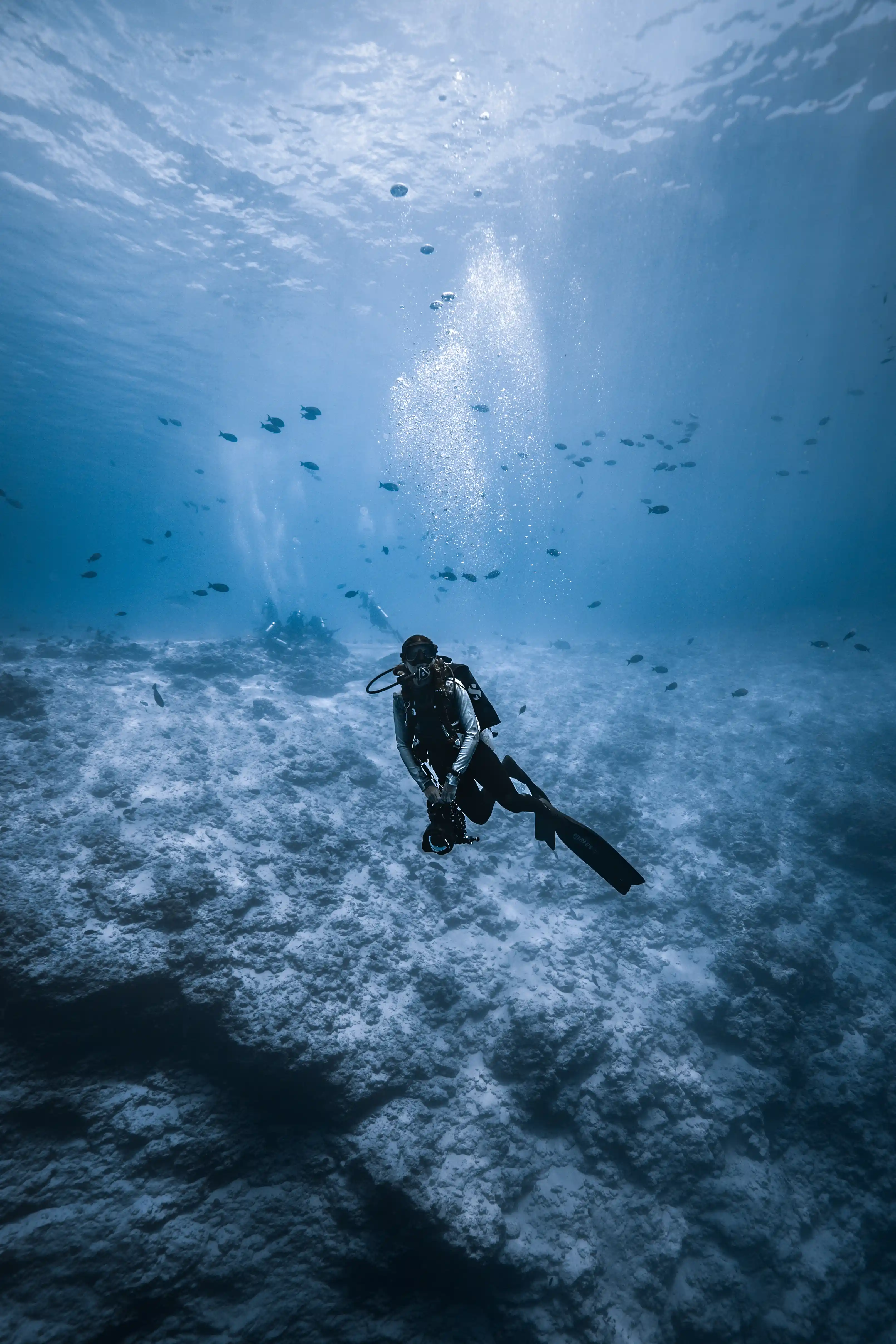
Shark diving in the Maldives has an excellent safety record. Professional dive centres across the archipelago conduct thousands of shark dives annually with no significant incidents. At Fuvahmulah specifically, the tiger shark dive has operated daily for years without injury to divers.
Context matters: sharks are not the danger that media portrays. Globally, there are approximately 70 unprovoked shark incidents per year across all species and all activities. In professional shark diving operations with trained guides and strict protocols, the risk is negligible.
The species you encounter at Fuvahmulah - tiger sharks, hammerheads, thresher sharks, mantas - are not attacking divers. Tiger sharks are large and require respect, but at Tiger Harbour they are habituated to calm, stationary divers. Hammerheads are skittish. Threshers are extremely shy. Mantas are gentle filter feeders.
How Dive Centres Keep You Safe
Professional shark diving operates on strict protocols. At Liquid Shark Divers, our tiger shark dive protocol includes: thorough land-based briefing, 1:3 guide-to-diver ratio, experienced safety team in the water at all times, strict diver positioning rules, and daily shark behaviour assessment.
What we never do: no hand-feeding, no chum clouds, no baited cages, no touching or chasing sharks, no flash photography, no overcrowding groups. These prohibitions exist to keep both divers and sharks safe.
The bait placement at Tiger Harbour uses tuna heads placed under rocks - a controlled version of the centuries-old harbour feeding pattern. The sharks are not being conditioned to associate divers with food. They're following a natural pattern that existed long before tourism.
Emergency protocols include surface support, oxygen on the boat, and communication procedures with the nearest medical facilities. DAN dive insurance is strongly recommended for all divers.
What You Can Do to Stay Safe
Follow the briefing. Every rule exists for a reason. The most important: remain stationary on the sand when sharks are present. Don't reach out. Don't swim toward them. Don't make sudden movements.
Be honest about your experience level. If you're not comfortable with currents, tell us. If this is your first shark dive, tell us. We'll adjust your position in the group and provide additional support. There's no judgment in being honest - it makes the dive better for everyone.
Maintain neutral buoyancy. Controlled, calm diving is safer diving. If you're kicking up sand, drifting off position, or struggling with your equipment, you're a distraction - both to the group and potentially to the sharks.
Trust your guides. They've done this dive thousands of times. They know the sharks individually. If a guide signals you to move, freeze, or ascend - respond immediately. They're reading behaviour you can't see yet.
Risk Profile by Species
Tiger sharks: large apex predators (3-4.5m) that require respect. At Tiger Harbour, they are habituated to stationary divers. The 1:3 guide ratio and strict protocol make encounters safe. The dive happens at 6-8m with mild current — physically easy even for less experienced divers.
Hammerhead sharks: skittish and cautious around divers. Schools maintain distance and have no record of diver incidents at Fuvahmulah. The main risk is environmental — strong currents at deep sites like Farikede. The sharks themselves are not the hazard.
Thresher sharks: extremely shy. They flee at the slightest disturbance. Zero risk from the animals — the only consideration is the 15-30m depth and dawn conditions at the cleaning stations.
Oceanic mantas: gentle filter feeders with no teeth or stingers. The only protocol is to avoid touching them (removes protective mucus) and not to block their path. They are curious about divers and often approach voluntarily.
Common Questions
Has anyone ever been injured shark diving at Fuvahmulah?
+
Are tiger sharks aggressive toward divers?
+
What if I panic during a shark dive?
+
Should I get dive insurance for shark diving?
+
What's the most dangerous part of diving in Fuvahmulah?
+
Has anyone been bitten at Tiger Harbour?
+
Can non-divers come along on the boat?
+
Fuvahmulah Dive Packages
5 to 10-night tiger shark diving packages with hotel and transfers included.
Diving Rates & Prices
Transparent pricing for shark dives, courses, equipment, and add-ons.
Tiger Sharks of Fuvahmulah
300+ named resident tiger sharks. Year-round encounters at Tiger Harbour.
Thresher Sharks of Fuvahmulah
Dawn cleaning station encounters with the elusive Pelagic Thresher.
Hammerhead Sharks of Fuvahmulah
Schooling scalloped hammerheads at Fuvahmulah's deep southern sites.
Oceanic Whitetip Sharks
Open-ocean encounters with the critically endangered oceanic whitetip.