A Volcano Among Coral Atolls
Every other island in the Maldives is a low-lying coral formation - barely a metre above sea level, sitting on the rim of a submerged atoll. Fuvahmulah is different. It's a solitary island of volcanic origin, rising vertically from the ocean floor to a depth of over 2,000 metres.
This geological uniqueness has profound implications for diving. The vertical walls create upwellings that bring nutrient-rich deep water to the surface. These nutrients fuel the food chain from plankton to apex predators. The result: an oceanic island that attracts open-ocean species found nowhere else in the Maldives.
Fuvahmulah is also one of only two one-island atolls in the Maldives (the other is Kaashidhoo). It has no lagoon, no reef flat, no sandbank chain. Just a single island surrounded by deep ocean in every direction.
Freshwater in a Saltwater Nation
Fuvahmulah has two freshwater lakes - Bandaara Kilhi and Dhadimago Kilhi. This is unique in the Maldives. No other island in the archipelago has permanent surface freshwater.
These lakes support a distinct ecosystem of freshwater fish, migratory birds, and wetland vegetation found nowhere else in the Maldives. The island's relatively high elevation (by Maldivian standards) and its volcanic geology create the conditions for freshwater to collect.
The lakes are part of the reason Fuvahmulah was designated a UNESCO Biosphere Reserve - recognising the island's unique terrestrial and marine ecosystems.
A Real Maldivian Community
Fuvahmulah is not a resort island. It's a real community of approximately 12,000 people with its own dialect, cuisine, and cultural traditions. When you stay here, you're in a Maldivian town - not a tourist enclave.
The island has its own distinct dialect of Dhivehi that other Maldivians sometimes struggle to understand. Its cuisine features unique dishes like bambukeylu hiti (breadfruit curry) and local tuna preparations. The culture around the sea - fishing, boat building, and now diving - is central to island life.
This authenticity is part of what makes Fuvahmulah special as a dive destination. Your local guides grew up here. They learned to dive in these waters. They know the sharks by name. The experience is rooted in genuine local knowledge, not imported resort hospitality.
Why the Marine Life is Unmatched
Fuvahmulah's isolation is the key. Unlike other Maldivian atolls that share reef systems and marine populations with neighbouring islands, Fuvahmulah stands alone. The nearest atoll (Addu) is 70km away. This means the marine life around Fuvahmulah is self-contained — a distinct ecosystem shaped by deep-ocean proximity.
The vertical drop from reef to 2,000m creates upwellings that bring cold, nutrient-rich water to the surface. These nutrients fuel a food chain from plankton to apex predators. The thermocline — the boundary between warm surface water and cold deep water — sits at accessible diving depth (15-25m), concentrating pelagic species exactly where divers can observe them.
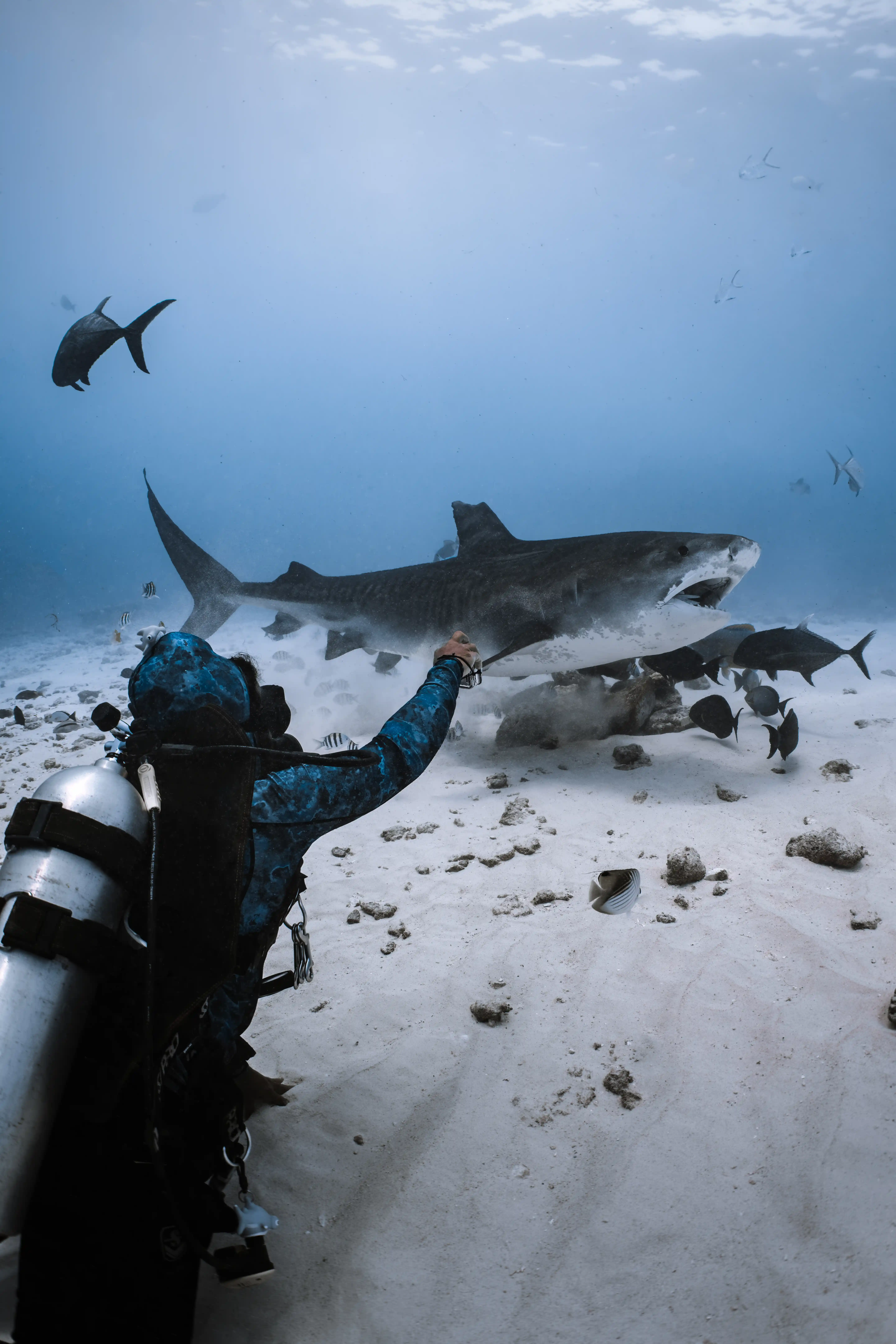
The result: 7+ shark species, oceanic mantas, whale sharks, and diverse reef life all concentrated around a single island. No other location in the Maldives, and few locations worldwide, offer this concentration of marine megafauna from shore-based diving.
Common Questions
Is Fuvahmulah part of the UNESCO Biosphere Reserve?
+
Can I explore Fuvahmulah beyond diving?
+
How is Fuvahmulah different from other Maldives islands?
+
Why don't other Maldives islands have tiger sharks?
+
Is Fuvahmulah affected by climate change?
+
Fuvahmulah Dive Packages
5 to 10-night tiger shark diving packages with hotel and transfers included.
Diving Rates & Prices
Transparent pricing for shark dives, courses, equipment, and add-ons.
Tiger Sharks of Fuvahmulah
300+ named resident tiger sharks. Year-round encounters at Tiger Harbour.
Thresher Sharks of Fuvahmulah
Dawn cleaning station encounters with the elusive Pelagic Thresher.
Hammerhead Sharks of Fuvahmulah
Schooling scalloped hammerheads at Fuvahmulah's deep southern sites.
Oceanic Whitetip Sharks
Open-ocean encounters with the critically endangered oceanic whitetip.