Are Sharks Dangerous to Divers? What the Data Actually Shows
No — for scuba divers, sharks are one of the least dangerous parts of the sport. Worldwide, unprovoked shark bites average around 60–70 per year across billions of ocean users, and divers make up a small fraction of those.
Are Sharks Dangerous to Divers? What the Data Actually Shows
No — for scuba divers, sharks are one of the least dangerous parts of the sport. Worldwide, unprovoked shark bites average around 60–70 per year across billions of ocean users, and divers make up a small fraction of those. The overwhelming majority of incidents involve surface activities — surfers and swimmers in murky water — not divers below it. We run tiger shark dives every single day in Fuvahmulah, and our island has never recorded a fatal shark attack.
That's the answer. The more interesting question is why — because once you understand it, the fear starts working for you instead of against you.
Why divers are the wrong target
Sharks don't hunt divers, for reasons that hold up in the data:
You don't look like food. Bites on humans overwhelmingly follow a mistaken-identity pattern: a silhouette at the surface that reads like a seal or a struggling fish. A diver — below the surface, bubbling, upright, making eye contact — matches nothing on any shark's menu. You're a large, strange, noisy animal, and sharks treat you like one: with caution.
You can see them, and they know it. Sharks are ambush-oriented. Predation logic collapses when the target is calmly looking at you. It's why "keep eye contact" is a real safety rule on our dives and not a mantra — a tiger shark that knows you see it behaves measurably differently.
Curiosity isn't aggression. Most close passes that get retold as "I was almost attacked" are investigations — a slow arc, a look, a departure. Sharks explore their world with proximity. In thousands of dives here, that's the entire story: approach, assess, move on.
"But tiger sharks specifically…?"
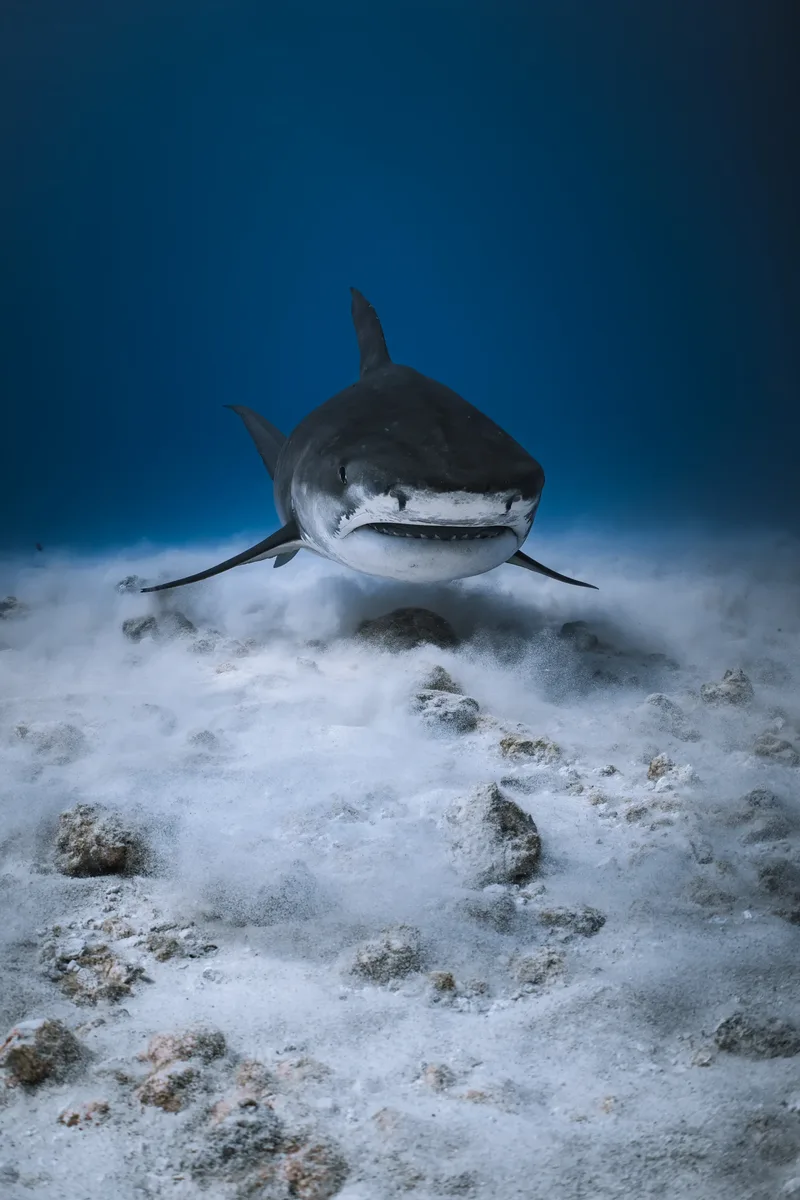
Fair — tiger sharks rank high in global incident statistics. Context matters: those numbers come almost entirely from surface encounters in murky coastal water, not from divers meeting sharks mid-water in clear ocean.
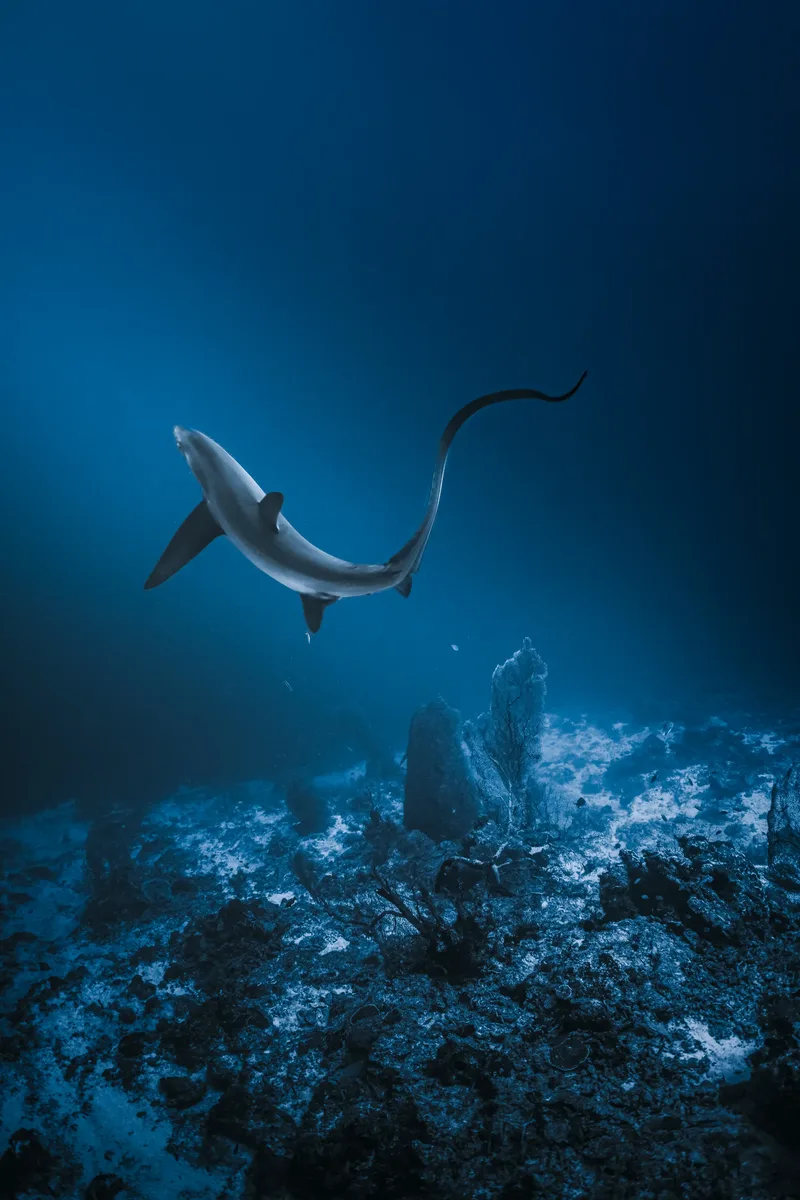
Here's the strongest dataset we can offer: Fuvahmulah hosts the largest documented tiger shark aggregation on Earth — 200+ identified individuals — and divers have been meeting them daily for years, at close range, without a single fatal incident on this island, ever. Structured encounters with professional protocols don't just manage the risk; they've built one of the cleanest safety records in adventure tourism.
Compare the actual math of your trip: the drive to the airport, the ladder on the boat, and dehydration in the sun are all statistically more dangerous than the sharks. Nobody writes headlines about ladders.
What makes the difference: conditions and conduct
Shark diving safety isn't luck — it's variables you can control:
- Visibility. Clear water (Fuvahmulah's specialty) removes the mistaken-identity problem almost entirely.
- Structure. Professional dives are choreographed: positioning, group formation, guides who read individual animals. Chaos is the risk factor; structure removes it.
- Behavior. Calm, low, predictable divers get calm sharks. No chasing, no touching, no bright colors flashing contrast into the blue.
- The operator. The single biggest safety variable in shark diving isn't the shark — it's who's running the dive.
New to all this? Start with our beginner's guide to shark diving — it walks you from zero to your first encounter, honestly.
The perspective shift
Around 100 million sharks are killed by humans every year. The ratio of danger between our species isn't close, and it isn't in the direction the movies taught you.
We built our whole company on what happens when people discover this in person: fear becomes fascination, fascination becomes respect, respect becomes protection. The tiger shark dive isn't dangerous. Staying afraid of the ocean your whole life — that's the loss.
FAQ
Do sharks attack scuba divers? Extremely rarely — divers account for a small minority of the ~60–70 unprovoked bites recorded globally each year, and virtually all serious incidents involve surface recreation, not diving. Structured shark dives with professional operators sit at the safest end of the spectrum.
Is it safe to dive with tiger sharks? With a professional operation, yes — Fuvahmulah's daily tiger dives and zero-fatality record are the working proof. The variables that matter are visibility, protocol, and operator standards.
What should I do if a shark comes close? Stay calm, stay low, keep eye contact, and let it pass — exactly what your briefing will cover. Close passes are curiosity, and your guides manage spacing before you'd ever need to think about it.
Which sharks should divers actually be cautious around? Any large shark deserves respect and protocol — that's why we run 1:3 ratios and dedicated safety divers on every big-animal dive. Respect, not fear, is the operating system.
Still carrying the movie version of sharks? Come meet the real ones — with a team whose whole job is making that meeting safe. Talk to us →
Liquid Shark Divers is Fuvahmulah's premium shark diving center and creative dive hub — small groups, uncompromising safety standards, and encounters that change how people see sharks. Meet the team →