Shark Diving Safety Tips: The Exact Protocol We Dive By
The ten rules below are not theory — they're the working protocol from a dive center that puts guests in the water with tiger sharks every day of the year. Follo

Shark Diving Safety Tips: The Exact Protocol We Dive By
The ten rules below are not theory — they're the working protocol from a dive center that puts guests in the water with tiger sharks every day of the year. Follow them anywhere in the world and you'll be safer; follow them here and you'll understand why Fuvahmulah has never recorded a fatal shark attack.
Most "shark diving safety tips" articles are written from a desk. This one is written from a sandy plateau at 7 meters, where the theory gets tested daily. (Is tiger shark diving safe at all? We answered that honestly here.)
The 10 rules
1. Choose the operator like your life depends on it — because the quality of your dive does. The biggest safety variable in shark diving is not the shark: it's the protocol, ratio and experience of the team running the encounter. Ask about guide-to-guest ratios (ours: 1:3 max), dedicated safety divers, and briefing depth before you book anyone — including us.
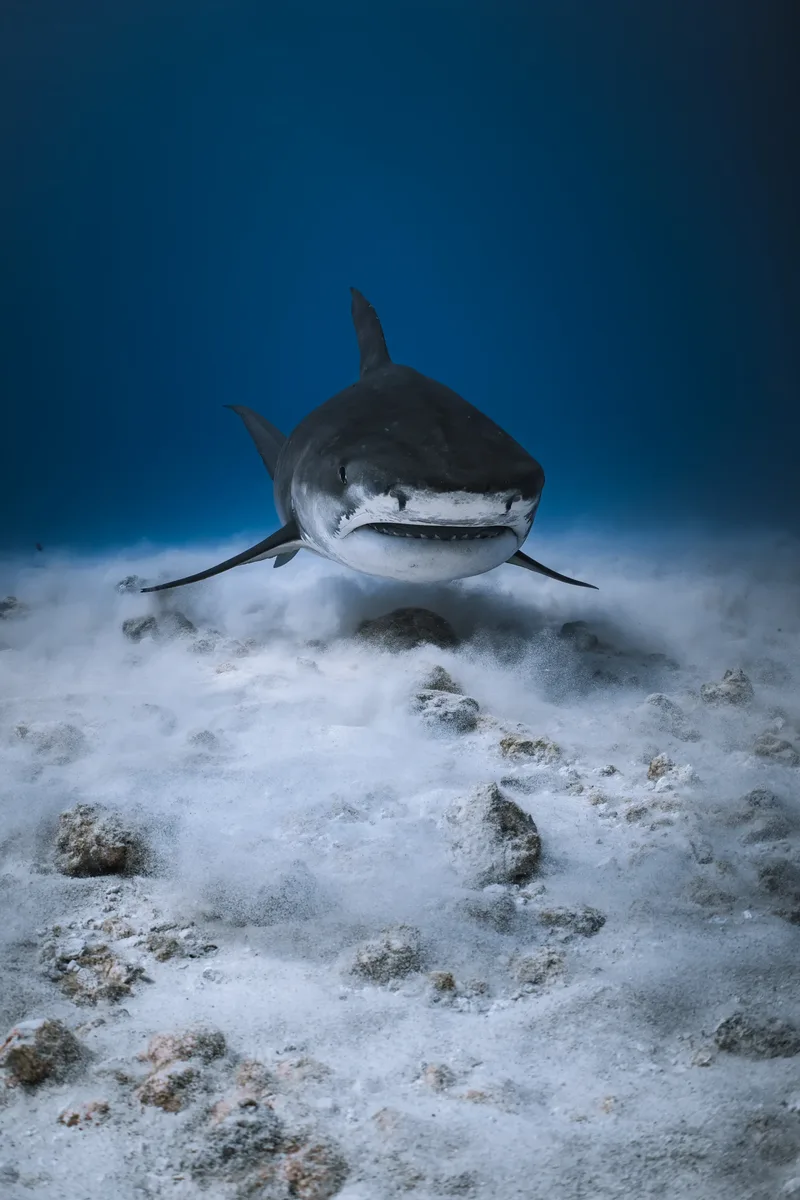
2. Stay low, stay grounded. Mid-water silhouettes read as prey-shaped ambiguity; a diver settled calmly near the bottom reads as furniture. On our tiger dives you kneel on sand in formation — it's the single biggest risk-reducer in the whole setup.
3. Keep eye contact. Sharks are ambush-wired. An animal that knows it's been seen switches out of assessment mode. Track the nearest shark calmly — not with fear, with attention. It's the same skill as watching traffic.
4. Never touch, never chase. Chasing turns you from observer into pressure; touching is disrespect with consequences. Passive observation only. The best encounters — and photos — come to divers who hold position and let the animal choose.
5. Wear dark colors. High-contrast brights (yellow, white) can draw investigatory attention from curious sharks. Dark wetsuit, dark fins, dark gloves-free hands. (No dark gear? Our rentals are — $30/day.)
6. Control your buoyancy before you meet big animals. A diver fighting their BCD can't follow instructions, hold formation, or stay aware. If your control is rusty, fix it first — a skills update costs $100 and transforms your entire dive.
7. Breathe slow, move slow. Sharks read body language fluently. Rapid movements and panicked bubbles broadcast distress; slow exhales and deliberate movement broadcast calm. Your breathing is a communication channel — use it.
8. Follow the briefing exactly — local protocol beats general knowledge. Every serious shark site has specific rules built from thousands of local encounters. Fuvahmulah's tiger protocol differs from the Bahamas', which differs from South Africa's. The briefing isn't a formality; it's the accumulated safety intelligence of the site. (What our tiger dive protocol involves.)
9. Know the exit plan. Where's the boat, who's your buddy, what's the signal, who ends the dive? Calm exits are planned exits. On our dives the answer is briefed before your fins are wet — and a guide is never more than a few meters from you.
10. If your gut says not today — say it. Tired, seasick, anxious beyond the useful kind? Tell your guide. Sitting out a dive is always respected here; pushing through compromised is the one thing our protocol can't fix for you.
The layer you don't see
Behind the diver-facing rules runs the professional layer: dedicated safety divers watching the angles you can't, guides who know individual sharks by personality, consistent provisioning that keeps behavior predictable, oxygen and first-aid-trained crew on every boat, a spare tank rigged as a drop tank on every deep dive, and a rehearsed evacuation chain — harbour, island hospital, recompression chamber in Malé — that has never once been needed. Safety is the first of our three pillars — before storytelling, before education — because without it, the other two are decoration.
FAQ
What are the most important shark diving safety rules? Operator choice, staying low and calm, eye contact, no touching or chasing, dark colors, and following the local briefing exactly. The first one outweighs the rest combined.
Can beginners follow this protocol? Yes — none of it requires experience, only attention. That's why certified divers with basic control can join our tiger dive, and why the briefing is thorough.
Is shark diving safe without a cage? Done properly, yes — Fuvahmulah's entire model is cage-free and protocol-heavy, with a spotless record. The system replaces the bars.
What's the biggest mistake people make on shark dives? Treating the rules as optional once they relax. The protocol isn't for the first ten minutes; it's for every minute. Calm discipline is the whole sport.
Want the full briefing from the team that wrote it? Ask us anything about the protocol before you book — we answer every question, in writing. Message us →
Liquid Shark Divers is Fuvahmulah's premium shark diving center and creative dive hub — small groups, uncompromising safety standards, and encounters that change how people see sharks. Meet the team →