Is Nitrox Worth It? An Honest Answer From a Center That Dives Three Times a Day
Short answer: if you're doing multiple dives a day for multiple days — the exact shape of a Fuvahmulah trip — yes, nitrox is worth it. Longer no-decompression ti
Is Nitrox Worth It? An Honest Answer From a Center That Dives Three Times a Day
Short answer: if you're doing multiple dives a day for multiple days — the exact shape of a Fuvahmulah trip — yes, nitrox is worth it. Longer no-decompression times on repetitive dives, shorter surface intervals, and a body that feels noticeably fresher on day four. If you dive twice a year, one tank at a time, at 12 meters — honestly, no, save the money. That's the whole answer; here's the understanding that makes it yours.
What nitrox actually is (60 seconds)
Enriched Air Nitrox is breathing gas with more oxygen and less nitrogen than air — typically 32% oxygen (EAN32) versus air's 21%. Nitrogen is the gas that limits your diving: it dissolves into your tissues under pressure, and managing its accumulation is what dive tables, computers and no-deco limits are about.
Less nitrogen in every breath = less nitrogen loading your tissues = longer allowable bottom times and cleaner repetitive diving. That's it. No turbo mode, no extra depth — just a better nitrogen budget.
The myths, cleared
"Nitrox lets you dive deeper." Backwards — oxygen becomes the limiting factor at depth, so nitrox actually has shallower maximum depths than air (EAN32 tops out around 33m; we plan conservatively within the Maldives' 30m recreational limit anyway). Nitrox is a bottom time tool, not a depth tool.
"Nitrox is for tech divers." It's the most mainstream specialty in recreational diving — arguably the new normal on liveaboards and multi-dive weeks worldwide.
"You use less air with nitrox." Your consumption rate doesn't change. What changes is how long your no-deco clock allows you to stay — which, on the dives where nitrogen (not air) is your limit, means more minutes where it counts.
"I feel less tired on nitrox." The science on post-dive fatigue is genuinely mixed — and yet a large share of multi-day divers, our guides included, swear by the difference on days three-plus. We'll call it: plausible physiology, real-world popular, not a guaranteed miracle.
The Fuvahmulah math
Run the numbers on a typical week with us — three dives a day: dawn specialty, tiger dive, afternoon wall:
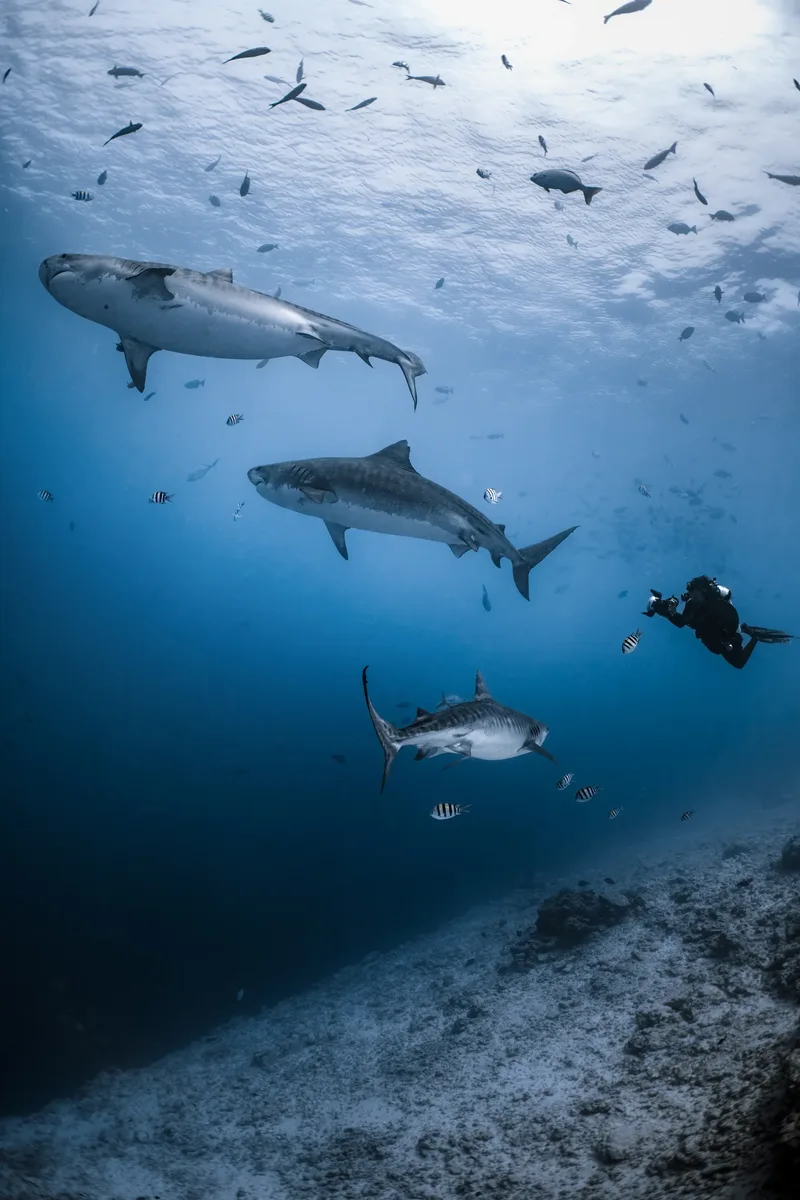
The dawn dives are where nitrox earns its keep: threshers at 15–30m and hammerheads at 20–30m sit exactly in the depth band where air's no-deco limits start pinching — especially on day three of repetitive diving. Nitrox buys you minutes at the cleaning station precisely when the Golden Moment is developing. Ask anyone who's had to leave a thresher early with 100 bar remaining: those minutes are the trip.
The tiger dive at 6–8m? Air is fine — nitrogen is never your limit there. Which is exactly the point: nitrox isn't religion, it's a tool for specific dives. A smart Fuvahmulah week runs nitrox on the deep mornings and doesn't overthink the rest.
The course: what $250 gets you
The SSI Enriched Air Nitrox specialty (EAN32/40) — $250 with us — is academics plus a practical session: how oxygen exposure works, how to plan nitrox dives, and the non-negotiable ritual of personally analyzing your tank and setting your computer before every nitrox dive. No required training dives, minimum age 10, done in an evening or two of self-paced study during your trip — it costs zero dive days.
It's also a lifetime card: every liveaboard and multi-dive destination you ever visit afterwards, the answer to "are you nitrox certified?" is yes. (All our courses and prices · what certifications you need here overall.)
Our honest recommendation
Coming for 5+ nights with dawn dives in your plan? Do the course en route or on arrival — it will pay for itself in cleaning-station minutes. Short trip, tigers-only, shallow profile? Skip it without guilt; the sharks don't check your card. And if you're already certified: tell us at booking and we'll have your analyzed tanks waiting.
That's the whole pitch. We'd rather you trust our "no" on the things you don't need — it's what makes the "yes" worth something.
FAQ
What does nitrox do, in one sentence? Less nitrogen per breath → slower nitrogen loading → longer no-decompression times and friendlier repetitive diving; not deeper, not more air.
Is nitrox safer than air? Dived within its limits with proper training, it's equivalently safe — and diving nitrox on air tables adds conservatism. The training exists because oxygen has depth limits that must be respected.
How long does the nitrox course take? An evening or two of self-paced academics plus a practical gas-analysis session — no dives required. $250, minimum age 10.
Is nitrox worth it in the Maldives specifically? On multi-day, multi-dive itineraries with 20–30m morning dives — the standard Maldives shape — it's among the most worth-it places on Earth to use it.
Not sure if your trip profile justifies it? Send us your dates and dive plans — you'll get a straight yes or no, not a sales pitch. Ask us →
Liquid Shark Divers is Fuvahmulah's premium shark diving center and creative dive hub — small groups, uncompromising safety standards, and encounters that change how people see sharks. Meet the team →