How to Master Buoyancy Control: 9 Fixes That Actually Work
Mastering buoyancy comes down to a short list: get properly weighted, control depth with your lungs instead of your inflator, trim flat, slow everything down, and practice on purpose instead of by accident.
How to Master Buoyancy Control: 9 Fixes That Actually Work
Mastering buoyancy comes down to a short list: get properly weighted, control depth with your lungs instead of your inflator, trim flat, slow everything down, and practice on purpose instead of by accident. It's the least glamorous skill in diving and the one that decides everything else — your air consumption, your photos, your reef impact, and how calm you are when a four-meter tiger shark glides past your shoulder.
We watch hundreds of divers arrive in Fuvahmulah every season. The difference between a stressful week and a transcendent one is almost never courage. It's buoyancy. Here are the nine fixes we teach.
The 9 fixes
1. Fix your weighting first — almost everyone is overweighted. The classic check: at the surface with an empty BCD, holding a normal breath, you should float at eye level and sink slowly when you exhale. Most divers carry 2–4kg too much, then pump air into the BCD to compensate — riding an elevator of corrections all dive. Proper weighting removes the problem at the source. Ask us to run a weight check on your first dive; it takes three minutes and upgrades your whole trip.
2. Breathe your depth. The inflator is for big changes; your lungs are the precision tool. Inhale to rise gently over a coral head, exhale to settle. There's a 2–3 second delay — anticipate, don't chase. Once this clicks, diving stops being a series of adjustments and becomes gliding. This is the single "aha" we see most on training dives.
3. Trim flat. Feet-low divers plow water like a snow shovel — more drag, more effort, more air, silted reef. Shift weights, adjust tank position, engage your core until you're horizontal like the water column's furniture. Flat trim is also what current rewards most — the two skills compound.
4. Stop sculling. Hands are for cameras and signals, not paddling. Constant hand-waving is unacknowledged bad buoyancy — every scull is a correction you didn't know you were making. Fold your arms for one dive and listen to what your body tells you it's been compensating for.
5. Slow is smooth. Fast movements create instability that needs correcting, which creates more movement. Move at half the speed you think, breathe long, let the water settle around you. Calm is a technique, and sharks read it fluently.
6. Master the hover. The benchmark skill: motionless mid-water, arms folded, fins still, holding depth on breath alone for a full minute. Practice on every safety stop — three minutes of free training every dive that most divers waste looking at their computer.
7. Log the variables. New wetsuit, salt vs fresh, aluminum vs steel, camera rig — each shifts your weighting. Note your setup + weight + how it felt in your logbook, and stop re-solving the same puzzle every trip.
8. Get video of yourself. Nothing fixes trim like seeing your trim. One clip of you plowing feet-down ends the debate your instructor has been gently losing. (Around here, there's usually a camera nearby.)
9. Take the course — seriously. Self-taught buoyancy plateaus. The SSI Perfect Buoyancy specialty ($300) is two focused training dives + academics folded into your dive days here — weighting workshop, trim tuning, hover drills, breath control — and it's the highest-return $300 in recreational diving. Rusty overall? Start with a $100 Scuba Skills Update. (All courses & prices.)
Why it matters here specifically
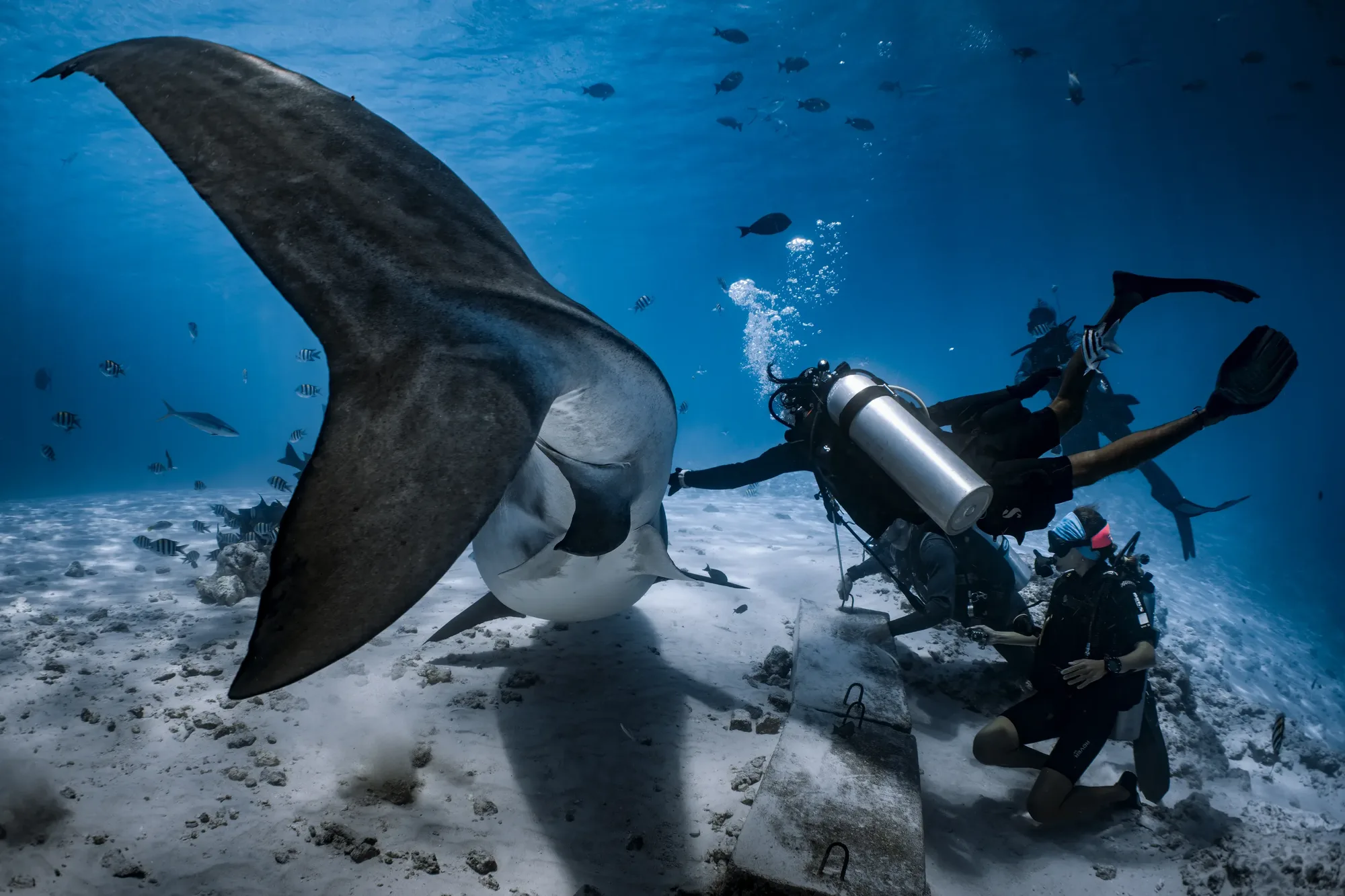
Fuvahmulah is a buoyancy-honest island: walls that drop to real depth, blue water with no reference, current with opinions, and dives where holding steady position isn't aesthetic — it's protocol. On the tiger dive you'll kneel stable on sand; on dawn dives you'll hold trim at 25 meters while hammerheads resolve out of the haze. Divers who train buoyancy here go home and find every other dive site feels easy. That's not a slogan; it's our most repeated guest review.
And for photographers: buoyancy IS photography. Every sharp, low, respectful frame in your feed was made by someone's lungs before their camera. (The certification ladder that gets you there.)
FAQ
How do I stop using so much air? Buoyancy, trim, and slow breathing — air consumption is mostly drag and correction. Fix weighting (fix #1) and most divers gain 10–15 minutes per tank within a few dives.
How much weight should I carry? Whatever makes you float at eye level with an empty BCD and normal breath — no formula replaces the check. Re-test whenever gear changes.
Is the Perfect Buoyancy course worth it? It's the course we'd make mandatory if we could: two dives, permanent upgrade, benefits every dive you'll ever do. $300 here, woven into your holiday without losing a dive day.
Can I practice buoyancy on ordinary dives? Every safety stop is a free hover clinic, every swim a trim rehearsal. Deliberate practice on real dives — ideally with an instructor's eyes on you — is exactly how mastery happens.
Want your buoyancy transformed in one trip? Tell us where you're at — we'll build the skills into your week so smoothly you'll barely notice the training. Just the results. Plan it with us →
Liquid Shark Divers is Fuvahmulah's premium shark diving center and creative dive hub — small groups, uncompromising safety standards, and encounters that change how people see sharks. Meet the team →