Oceanic Manta Rays in the Maldives: Fuvahmulah Has the Giants
Most manta encounters in the Maldives — the famous ones at Hanifaru Bay and the resort-atoll cleaning stations — are reef mantas. Fuvahmulah offers something rar
Oceanic Manta Rays in the Maldives: Fuvahmulah Has the Giants
Most manta encounters in the Maldives — the famous ones at Hanifaru Bay and the resort-atoll cleaning stations — are reef mantas. Fuvahmulah offers something rarer: oceanic manta rays, the largest rays on Earth, with wingspans of 5–7 meters (giants approaching 9m have been recorded). They cruise our walls year-round wherever plankton blooms, with a clear peak from March to May.
If you didn't know there were two kinds of manta in the Maldives — you're exactly who this article is for. The difference isn't academic. It's the difference between watching a beautiful animal and watching the sky move.
Oceanic vs reef manta: what's actually the difference?
Reef mantas (Mobula alfredi) are the Maldives' celebrities: 3–4 meter wingspans, resident around atolls, gathering predictably at cleaning stations and famous feeding events. Wonderful animals — genuinely.
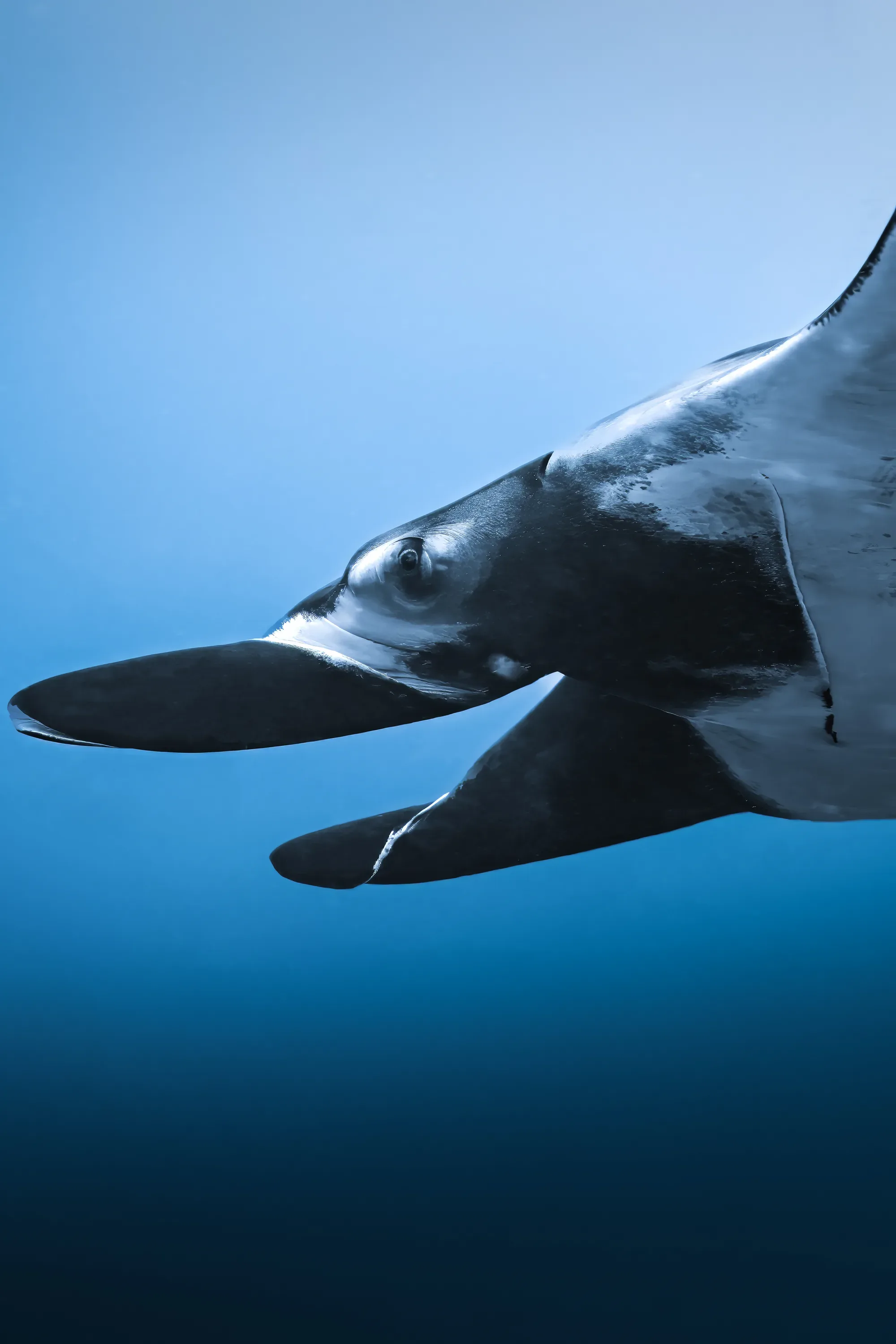
Oceanic mantas (Mobula birostris) are their bigger, wilder cousins: up to double the wingspan, up to two tons, travelers of open ocean rather than residents of lagoons. Most Maldivian divers go a whole career without one, because oceanic mantas need what most atolls don't have — immediate deep water.
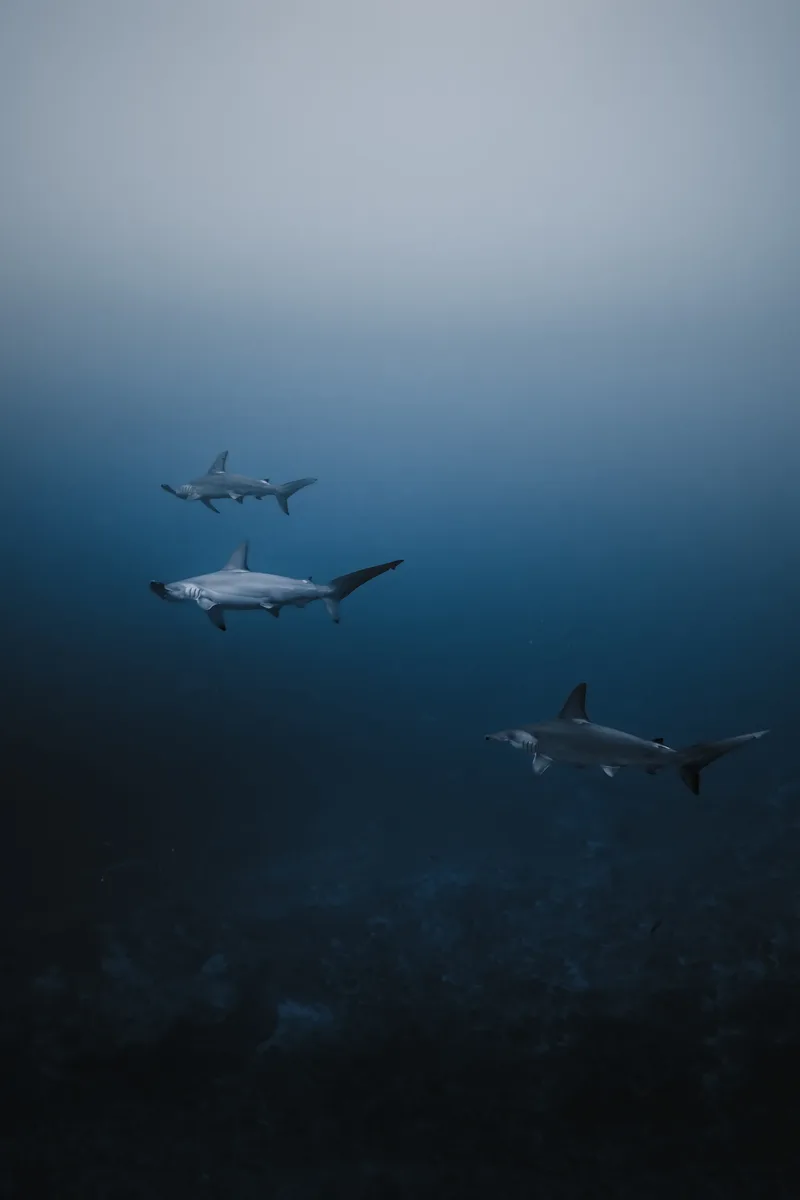
Fuvahmulah is one deep-water island with no lagoon at all. The same geography that brings tiger sharks, threshers and hammerheads puts the oceanic manta highway directly against our reef. When they come, they come to us.
What the encounter is like
You're on the wall, somewhere between 15 and 30 meters, blue on your left shoulder. And then the light changes — because something the size of a small aircraft has moved between you and the sun.
An oceanic manta doesn't dart anywhere. It arrives. Wingtips rising and falling in slow motion, cephalic fins unrolled, mouth wide as a doorway when it's feeding. On plankton-rich days they barrel-roll — looping through the bloom again and again, feeding in graceful somersaults that make every diver forget their air consumption entirely (your guide won't; that's what we're for).
They're curious, too. Oceanic mantas regularly circle back over divers, apparently studying the bubbles. Being inspected by a two-ton animal with the largest brain of any fish is an experience that rearranges you a little.
When to come: manta season in Fuvahmulah
March to May is the peak — plankton blooms thicken, and it's also mating season, when trains of mantas follow a female in courtship lines along the blue. Sightings happen year-round on bloom days (the ocean doesn't read calendars), but spring is when the odds tilt properly in your favor.
The beautiful scheduling accident: manta peak overlaps with prime thresher months, whale shark season and the tail of hammerhead season — with tiger sharks daily, as always. March–April is arguably the fullest month on the whole marine calendar. Plan accordingly — and early, because everyone else's calendar says the same thing.
How we dive the manta encounters
Manta days here are read, not scheduled. Our guides watch the water color, the current lines and the morning's plankton before deciding which side of the island gives the best odds — then the encounter itself is all about discipline: settle low on the reef side of the wall at 15–30 meters, keep your profile calm, and let the animal own the blue. Mantas are attention-readers; a still, relaxed group gets flybys a kicking one never will.
On thick bloom days the action can rise to the surface — snorkel-range barrel-rolling on lucky afternoons, which non-diving partners occasionally get to gatecrash. And for photographers: a manta against the sun is the classic silhouette gift — ask us about shooting it properly.
The rules: how we behave around giants
Oceanic mantas are listed as Endangered — every encounter is a privilege with responsibilities:
- Never touch. A manta's skin carries a protective mucus layer; a "friendly" hand does real harm.
- Don't chase, don't block. Hold position, stay low on the reef side, let the animal choose the encounter. (Chased mantas leave. Respected mantas circle back. Karma works fast underwater.)
- Photograph the belly when you can. Every oceanic manta's ventral spot pattern is unique — a fingerprint. We contribute ID shots to the Maldives Manta Ray Project, and your photo can add a data point to real science. Guests love this more than they expect to.
Manta + tiger + thresher: the Fuvahmulah day
Here's the sentence that sounds made up until you've lived it: on a good spring day here, you can watch hammerheads at dawn, kneel with tiger sharks mid-morning, and have an oceanic manta blot out the sun in the afternoon.
No liveaboard crossing. No channel-drift lottery. One island, one dive & stay package, three dives a day.
FAQ: oceanic mantas in the Maldives
Where can you see oceanic manta rays in the Maldives? Fuvahmulah offers the highest potential — its deep-water, no-lagoon geography is exactly what oceanic mantas need. The famous resort-atoll manta sites (Hanifaru Bay, Baa Atoll) host reef mantas, the smaller species.
When is manta season in Fuvahmulah? Peak March–May, during plankton blooms and mating season. Possible year-round on bloom days. Full species calendar here.
How big do oceanic mantas get? Wingspans of 5–7 meters are typical here; the species can approach 9 meters and 2,000 kg. You will feel very small, in the best possible way.
Do I need special certification for manta dives? The encounters typically happen at 15–30m along the wall, so AOWD (or Deep training) is recommended — here's the full certification picture. More on Fuvahmulah's mantas on the species page.
Want spring dates while they exist? March–May sits inside high season and books early. Tell us "manta season" and your rough dates — we'll tell you honestly what's still open. Check availability →
Liquid Shark Divers is Fuvahmulah’s premium shark diving center and creative dive hub — small groups, uncompromising safety standards, and encounters that change how people see sharks. Meet the team →