How Hard Is the Rescue Diver Course — and Is It Worth It?
Honest answers: it's the most demanding recreational course you'll take, and it's worth more than every other card in your wallet combined. The SSI version is ca
How Hard Is the Rescue Diver Course — and Is It Worth It?
Honest answers: it's the most demanding recreational course you'll take, and it's worth more than every other card in your wallet combined. The SSI version is called Diver Stress & Rescue ($765 with us, plus the React Right first-aid prerequisite, $250), it runs 3–4 days, and it is the course our own guides describe the same way, unprompted: "the one that turned me into an actual diver." Not because it's brutal — because it's transformative. Hard like a good mountain, not hard like an exam.
Here's what it actually involves, who should take it, and why a shark-diving island is a strangely perfect classroom for it.
What "hard" actually means here
Let's demystify the difficulty, because the internet loves to dramatize it:
Physically: honest but humane. You'll tow simulated casualties, manage an unresponsive diver at the surface, perform exits, repeat skills until smooth. Tiring days, early nights, zero athletic heroics required — we've certified guests from their 20s to their 60s. Reasonable fitness and willingness beat gym numbers.
Mentally: this is the real work, and the real gift. Rescue training rewires your attention — from my dive, my gear, my photos to the whole picture: my buddy's breathing rate, that diver's overweighted struggle, the current change nobody mentioned. The course installs situational awareness as a habit, and stress management as a skill: recognizing panic (in others and yourself) early, when it's still a small fire.
Emotionally: scenarios feel real by design — that's the point and the payoff. The day you handle a simulated emergency smoothly is the day the background anxiety many divers carry quietly retires. Confidence built on competence doesn't wobble.
What you learn (the short version)
Stress theory and panic psychology · self-rescue first · tired-diver and panicked-diver responses · surfacing an unresponsive diver · in-water rescue breathing · search patterns · accident management and the chain of care — braided with the React Right layer: CPR, first aid, AED, oxygen provision ($250, no dive experience required, and frankly a course every human should hold anyway; non-diving partners often take it alongside).
Prerequisites for the full Stress & Rescue: certified diver, 12+, current first aid/CPR (that's React Right — we run them as a natural pair). (All courses and prices · where each course fits your Fuvahmulah path.)
Why take it HERE, of all places
A fair question — rescue courses run everywhere. Three honest reasons:
You'll train inside a real safety culture, not beside one. Safety is the first of our three pillars, visible daily: 1:3 ratios, dedicated safety divers, protocol that never bends. Your instructors aren't reciting the manual — they're the people who run the world's most famous cage-free shark dive with a spotless record. You learn rescue from a team for whom it's not theoretical.
Real ocean, real conditions. Managing scenarios in living water — current, swell, actual boats — builds the version of the skills that transfers everywhere. Pool-perfect rescues are choreography; ours are rehearsals.
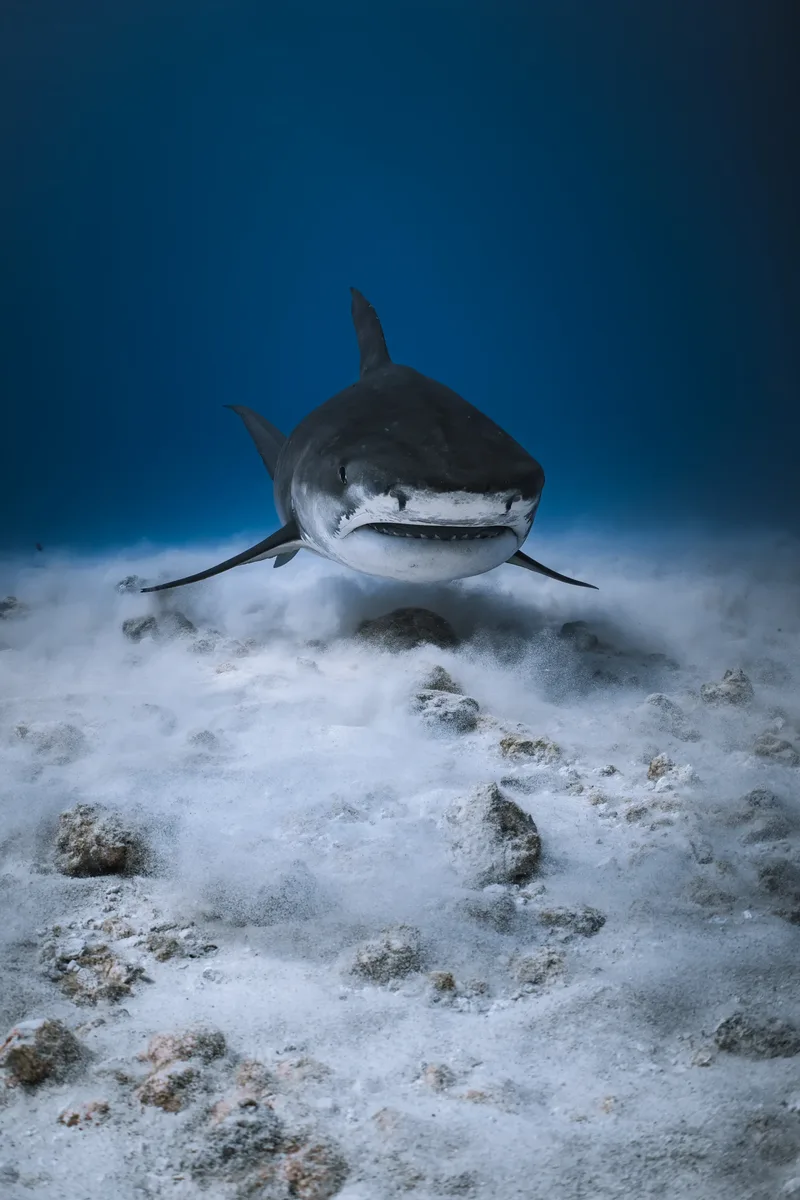
The week doubles. Course days interleave with tiger dives and dawn dives — you'll finish your rescue scenario at eleven and kneel in front of tiger sharks at three, noticing (with your newly rewired attention) exactly how the safety architecture around you works. No other classroom offers that feedback loop.
Is it worth it — the decision in one paragraph
If diving is becoming your thing — trips planned around it, a buddy you care about, dawn alarms voluntarily set — then yes, unreservedly: it's the card that upgrades every future dive, the prerequisite to every professional path, and the difference between being on a dive and being an asset to it. If you dive once a year and mostly want the fish to be pretty — take Perfect Buoyancy first and come back to this one when the ocean has fully claimed you. It will.
FAQ
How long does the Rescue Diver course take? With us: 3–4 days for Diver Stress & Rescue, ideally inside a 7–10 night trip so dive days and course days breathe. React Right adds a day, often run first.
Can you fail the rescue course? You can't "fail" your way out — skills are repeated until they're smooth; the only requirement is showing up willing. Nervousness is normal fuel here, not a disqualifier.
PADI Rescue Diver vs SSI Diver Stress & Rescue — same thing? Functionally equivalent and mutually recognized everywhere; SSI's version leans harder into stress psychology (in our view, its best feature). Cards from either cross-credit cleanly.
Is Rescue Diver required for shark diving? No — the tiger dive requires far less. But rescue-trained guests dive our shark sites with a visibly different calm. The card isn't required; the mindset is priceless.
High season is coming — imagine arriving in it as the diver others feel safe next to. Tell us your dates and current level; we'll build the course into a trip you'll never forget. Start here →
Liquid Shark Divers is Fuvahmulah's premium shark diving center and creative dive hub — small groups, uncompromising safety standards, and encounters that change how people see sharks. Meet the team →