Thresher Shark Photography: Mastering the Dawn Light
Thresher shark photography is the graduate exam of shark shooting: a shy subject, at 15–30 meters, in pre-sunrise light, that rewards absolute stillness and punishes everything else.
Thresher Shark Photography: Mastering the Dawn Light
Thresher shark photography is the graduate exam of shark shooting: a shy subject, at 15–30 meters, in pre-sunrise light, that rewards absolute stillness and punishes everything else. The recipe that works: shutter no slower than 1/160, ISO spent bravely (640–1600), aperture sacrificed before shutter, strobes low-or-off, and a body so settled on the reef line that you register as landscape. Get it right and you come home with the rarest common photograph in diving — that impossible tail, drawn against blue twilight.
Fuvahmulah is one of the only places on Earth where you can attempt this shot daily. Here's the full method.
Know your subject: the ghost with the tail
Threshers rise from deep water to our cleaning stations at dawn — elegant, big-eyed, and famously shy. They are everything tigers are not: where tigers approach and investigate, threshers tolerate, conditionally, at a distance they control. Spook one — a lunge, a strobe blast, a diver rising off the reef — and the station goes empty for everyone.
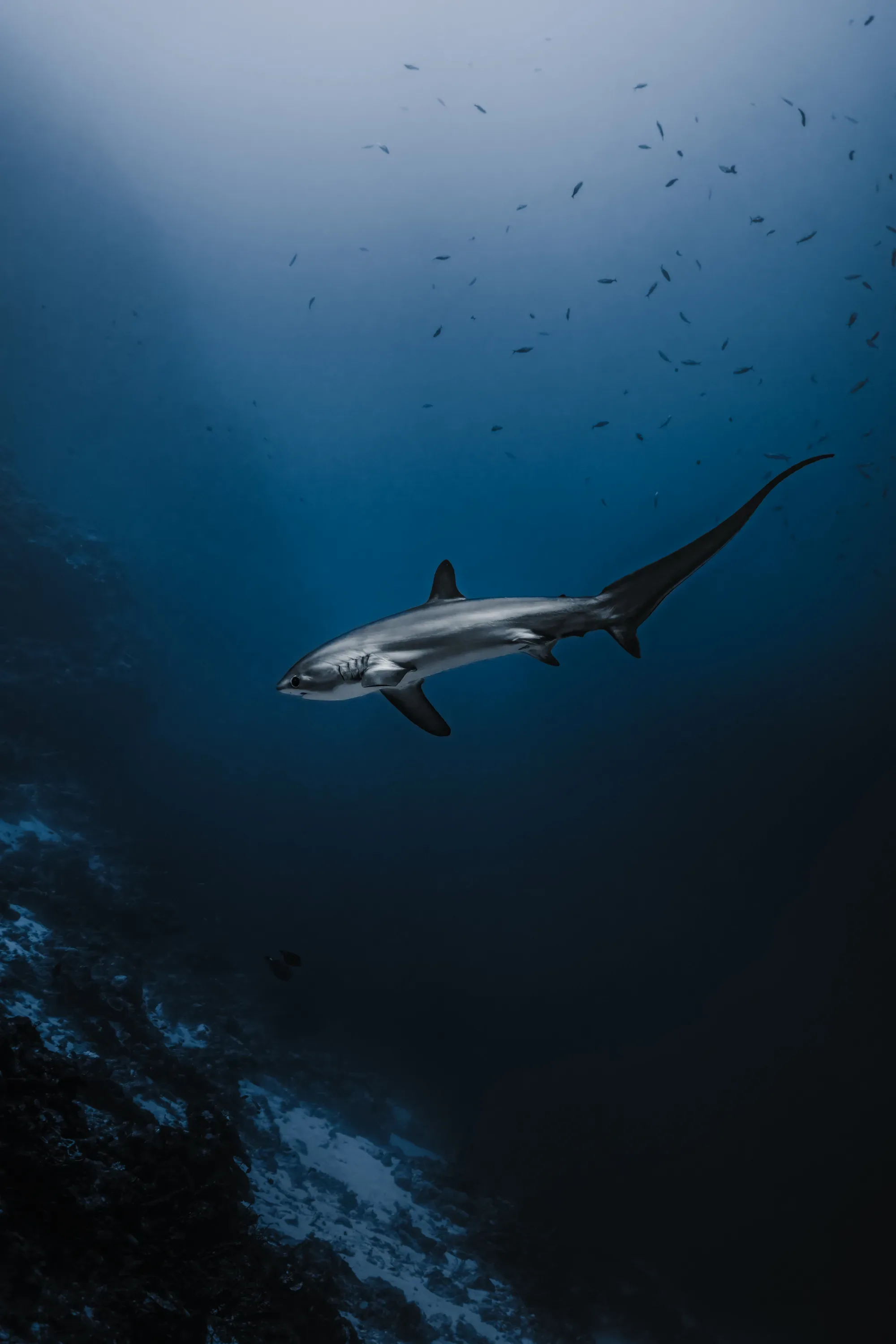
The behavioral key is what we call the Golden Moment: a thresher settling into a cleaning pass slows to stall speed and drops its pectoral fins — the signal that it feels safe. That posture is both your ethical green light and your photograph: fins down, body arced, tail trailing like calligraphy. Learn to see it forming, and you'll be composed and ready while others are still noticing the shark.
The light problem (and why it's the point)
At 5:45am at 25 meters, you're working with a fraction of surface light, all of it blue. This is genuinely hard — and it's also why thresher frames look the way they do: moody, monochrome-blue, cinematic. Stop fighting the darkness and start exposing it:
- Shutter: 1/160 minimum, 1/200 when the animal's working. The tail alone moves faster than the body suggests.
- ISO: this is the dive you spend it on. 640 to start, 1600 without flinching. A grainy sharp thresher is a portfolio image; a clean blurry one is nothing. Modern sensors + good RAW processing make this a solved anxiety.
- Aperture: open it. f/5.6–f/7.1 — you need the light, and at these subject distances depth of field survives.
- Strobes: low power or none. Cleaning stations are intimate spaces; blasting them is both poor etiquette and poor art — ambient blue is the aesthetic. If you light, feather it from wide.
- Focus: continuous AF, center-weighted zone; in the dimness your AF will hunt — pre-focus on the cleaning station's rock line and let the shark come onto your plane.
Full settings logic for all conditions lives in the cheat sheet; dawn is its extreme case.
The discipline: stillness as strategy
Everything about this dive favors the composed:
Arrive settled, stay planted. Descend early and quiet, find your position along the station's viewing line, go still, and remain still — buoyancy mastery is the entry fee. The divers who get Golden Moments are indistinguishable from rocks for forty minutes.
No pursuit. Ever. A thresher leaving is a decision, not an invitation. The station rewards patience with return passes; it punishes one eager diver on behalf of everyone. (Our guides brief this hard, and enforce it kindly.)
Manage your own machine. Deep-ish, dark, early: watch your no-deco time (this is the dive nitrox was made for), watch your air, and keep your breathing long and slow — for the shark's comfort and your own.
Season your attempt. Threshers show year-round at dawn; the December–April window brings the calmest seas and cleanest light — the calendar has the full picture. Give yourself multiple mornings: this shot is a numbers game that rewards a 7–10 night trip.
Why this photograph matters
Almost nobody has it. Tiger images, magnificent as they are, exist in the thousands; a true Golden-Moment thresher — fins dropped, tail arced, blue twilight — remains one of the rarest achievable images in recreational diving. It's the frame that makes other photographers write to you. And it's teachable: I've coached guests from "never shot in low light" to a wall-worthy thresher inside one mentorship week. The dawn alarm is the only part I can't do for you.
FAQ
How deep are thresher shark photo encounters? 15–30m at Fuvahmulah's cleaning stations — AOWD territory, with Deep training recommended so depth is comfort, not distraction.
What ISO should I use for dawn shark dives? Higher than feels polite: 640–1600. Sharpness first, grain forgiven — noise reduction in post handles the rest.
Can I photograph threshers with a GoPro? Honestly: it will struggle — small sensors and dawn gloom are enemies (the GoPro guide explains). Run it for memory footage, but this particular shot wants a real sensor.
Where is the best place to photograph thresher sharks? Malapascua made them famous; Fuvahmulah offers regular dawn sightings plus tigers the same morning — and quieter stations. For a photography trip, that combination is unmatched.
Want the tail on your wall? Come spend some dawns with us — and if you want me next to you adjusting your ISO in real time, that's a mentorship. Plan the mornings →
Sina Ritter is a multi-award-winning underwater photographer, SSI Photo & Video instructor, and co-founder of Liquid Shark Divers Fuvahmulah. Her alarm is set for 5:15. It's worth it. Meet the team →